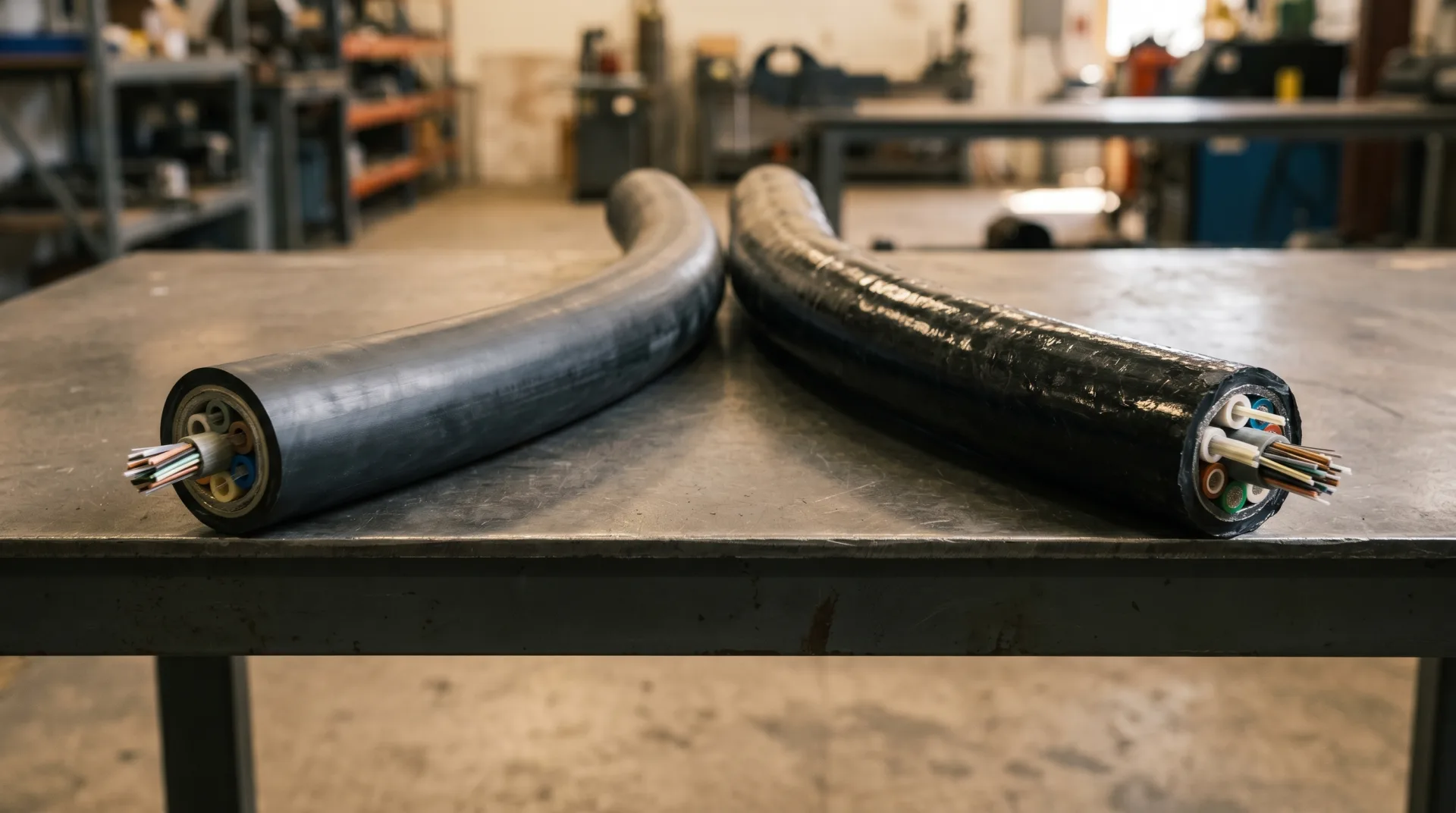
Raw Materials of High Quality Optical Fiber Glass
The Raw Materials Behind High-Quality Optical Fiber Glass
When it comes to fiber-optic cables, the glass inside is the real star. But what exactly is this glass made from, and why does the quality of its raw materials matter so much?
Understanding the raw materials of optical fiber glass helps you appreciate why premium cables perform better and last longer. For a broader view of how these materials become a finished cable end-to-end, see our companion guide on low-loss optical fiber from raw materials to final product.
What Is Optical Fiber Glass Made Of?
The core of fiber-optic cables is primarily made from silica glass, a type of glass composed almost entirely of silicon dioxide (SiO₂).
But not just any silica will do — for fiber optics, manufacturers need ultra-pure silica to ensure minimal signal loss and distortion.
What Are the Key Raw Materials in Optical Fiber Glass?
At the heart of every high-performance fiber-optic cable is an incredibly pure strand of glass. But this isn't your average windowpane glass — it's engineered from precisely selected raw materials to achieve unmatched clarity and low signal loss. Let's take a closer look at the key materials used to make optical fiber glass and what each one contributes to performance:
1. Silicon Dioxide (SiO₂)
Role: The foundational ingredient of fiber-optic glass.
Why it matters: Silicon dioxide — also known as silica — is the primary component (often over 99.9%) of optical fiber glass. In its ultra-pure form, silica provides the ideal medium for light transmission. It has excellent transparency, thermal stability, and a low attenuation profile, allowing light signals to pass through with minimal loss.
2. Germanium Dioxide (GeO₂)
Role: A common dopant used to modify the refractive index.
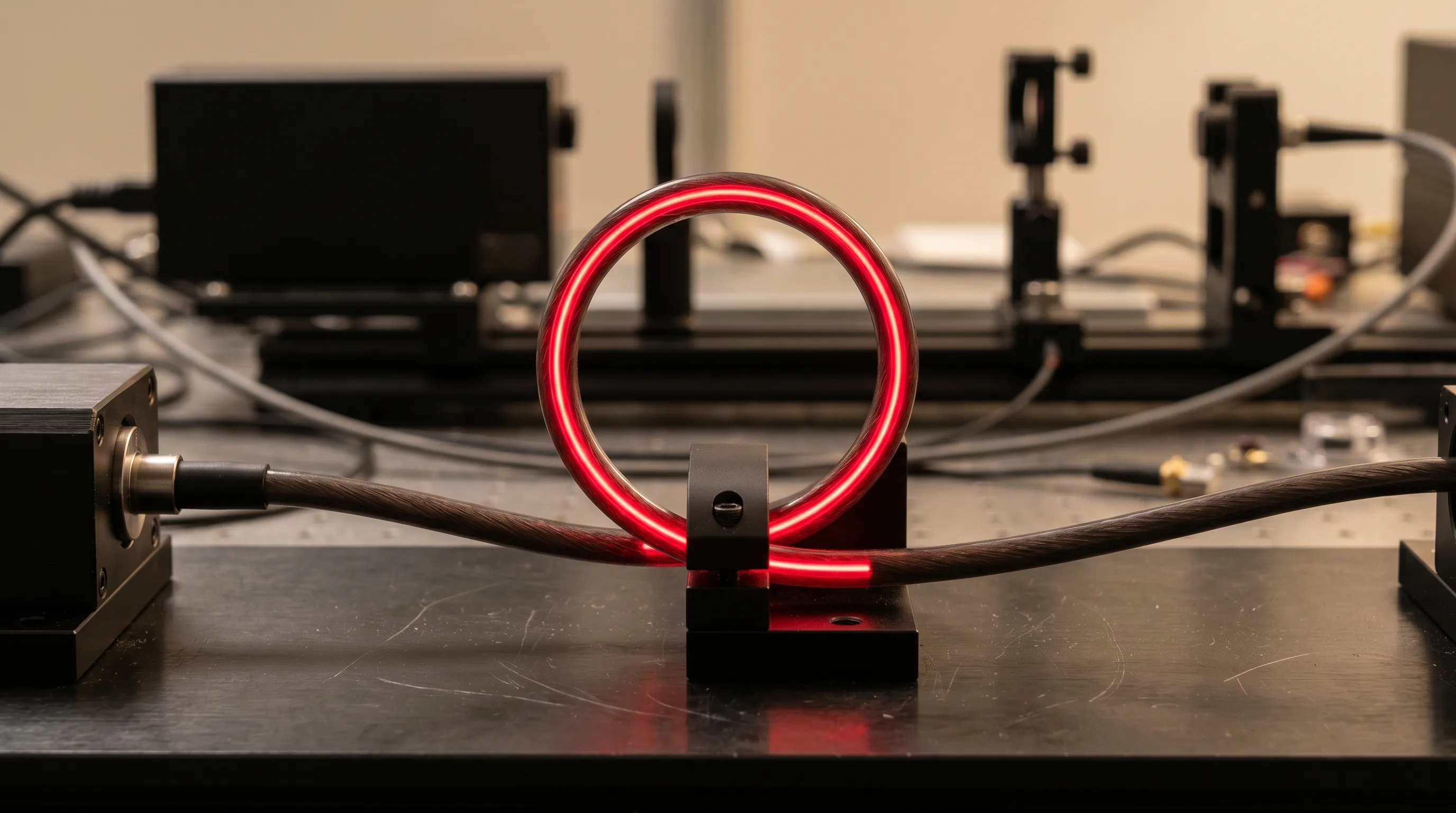
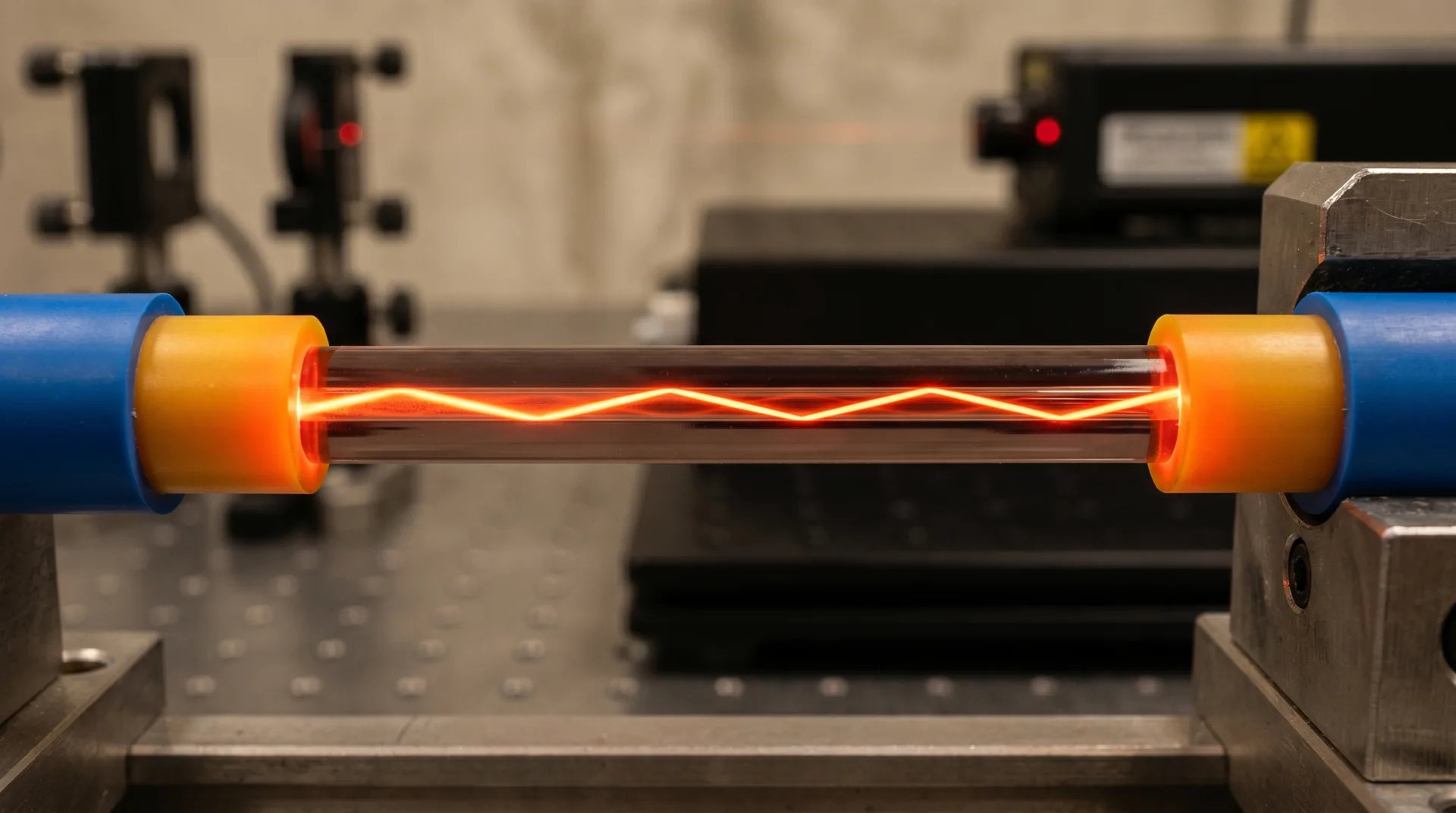
Why it matters: GeO₂ is often added to the silica in the fiber's core to increase its refractive index. This creates a refractive contrast between the core and cladding, which is essential for guiding light through the fiber. It helps maintain strong signal integrity, especially in single-mode and graded-index multimode fibers.
3. Phosphorus Pentoxide (P₂O₅)
Role: Dopant to increase refractive index or tailor dispersion properties.
Why it matters: P₂O₅ can be used alongside or instead of GeO₂, especially in specialty fibers. It enhances light guidance and can fine-tune the fiber's performance, including dispersion and numerical aperture. It's more common in high-performance or custom fibers.
4. Boron Trioxide (B₂O₃)
Role: Used to lower the refractive index in the cladding layer.
Why it matters: B₂O₃ acts as a contrast agent when doped into the cladding. It ensures that light remains confined within the core, preventing signal leakage. It also enhances the fiber's flexibility and thermal stability, reducing microbending and breakage risk during installation.
5. Fluorine (F)
Role: Another dopant to reduce refractive index in cladding.
Why it matters: Fluorine-doped silica helps further control the light path by lowering the refractive index of the cladding. It's used in high-speed and specialty fibers where precise light confinement is critical.
6. Hydroxyl Ions (OH⁻) — the Unwanted Guest
Role: An impurity that must be minimized.
Why it matters: Even trace amounts of hydroxyl ions can absorb light at specific wavelengths (especially in the infrared region). This leads to attenuation peaks — basically, signal "dead zones." That's why modern fiber production focuses heavily on dry processes to eliminate OH⁻ content in the glass. For a wider look at what contributes to attenuation inside a fiber link, read can anything actually disrupt the light signal inside fiber.
7. Trace Metal Ions (Fe, Cu, Cr, etc.) — More Impurities to Avoid
Role: Typically contaminants that degrade performance.
Why it matters: Metallic ions absorb and scatter light. Even tiny quantities — measured in parts per billion — can significantly affect the performance of fiber. High-end fiber manufacturing eliminates these through chemical purification steps.
From the core's silica to the dopants that shape how light behaves, each raw material plays a specific role in how effectively your fiber-optic cable performs. Premium fibers — like those offered by TTI Fiber — are made using carefully controlled materials to ensure consistent speed, low loss, and long-term reliability. Browse our full range of outdoor fiber optic cable built on this same ultra-pure silica stack.
If you're building a high-speed network, investing in fiber with high-quality raw glass materials isn't just a good idea — it's essential for performance.
How Raw Materials Influence Performance
- Purity: The cleaner and more refined the silica and dopants, the lower the attenuation (signal loss).
- Consistency: Uniform raw material quality leads to consistent glass structure, reducing scattering and defects.
- Durability: Correct raw material composition improves mechanical strength and resistance to environmental stress.
Put another way: purity sets the floor of how little signal your fiber can lose, consistency decides how repeatable that performance is across every spool and splice, and durability decides whether those numbers still hold after a decade in a duct or aerial span. Ignore any one of the three and the raw-material advantage disappears on the first long run. For a deeper look at how material choices ripple into finished-cable behavior, see our guide on tight-buffered vs. loose-tube fiber optic cables.
How Do Manufacturers Get Such Pure Materials?
Creating the ultra-pure glass needed for high-performance fiber optic cables isn't simple. It requires advanced manufacturing techniques and careful chemical processes to transform basic raw materials into flawless strands that can carry light signals over miles without losing strength.
Here's a look at how manufacturers achieve this level of purity and precision:
1. Starting With High-Quality Raw Materials
The process begins with silicon-based compounds like silicon tetrachloride (SiCl₄) or tetraethyl orthosilicate (TEOS). These chemicals are the precursors to silica glass but are far from pure at this stage.
Manufacturers source these chemicals from reliable suppliers and often purify them further to remove metals, moisture, and other contaminants.
2. Chemical Vapor Deposition (CVD) — The Heart of Purification
One of the most important methods for producing pure optical fiber glass is Chemical Vapor Deposition (CVD).
- In CVD, gases like silicon tetrachloride and oxygen are fed into a heated reaction chamber.
- These gases chemically react and deposit layers of pure silica glass on the inside of a hollow silica tube or a solid preform rod.
- This process happens at very high temperatures (over 1500°C), allowing the formation of extremely pure and dense glass layers.
Because the reaction occurs at the molecular level, the resulting glass contains almost no impurities such as metallic ions or hydroxyl groups, which can degrade signal quality.
3. Modified Chemical Vapor Deposition (MCVD) for Fine Control
An evolution of CVD, Modified Chemical Vapor Deposition (MCVD) allows manufacturers to precisely control the doping of the glass — that is, how much and where additives like germanium or phosphorus are introduced.
- Inside a rotating silica tube, layers of doped and pure silica are deposited one by one.
- This layering forms the core and cladding with the exact refractive indices required for optimal light transmission.
MCVD enables the production of fibers with exacting optical properties, ensuring that light travels cleanly with minimal loss.
4. Vapor Axial Deposition (VAD) and Outside Vapor Deposition (OVD)
Other specialized methods include:
- Vapor Axial Deposition (VAD): Glass soot particles are deposited axially onto a rotating rod, then consolidated into solid glass.
- Outside Vapor Deposition (OVD): Silica particles are deposited on the outside of a rotating rod, then consolidated into a preform.
These processes also produce ultra-pure glass but differ slightly in how the glass preforms are built.
5. Stringent Quality Control and Testing
After the glass preforms are made, manufacturers subject them to rigorous testing:
- Spectral analysis to detect trace impurities
- Attenuation testing to measure signal loss
- Microscopic inspection for defects or inclusions
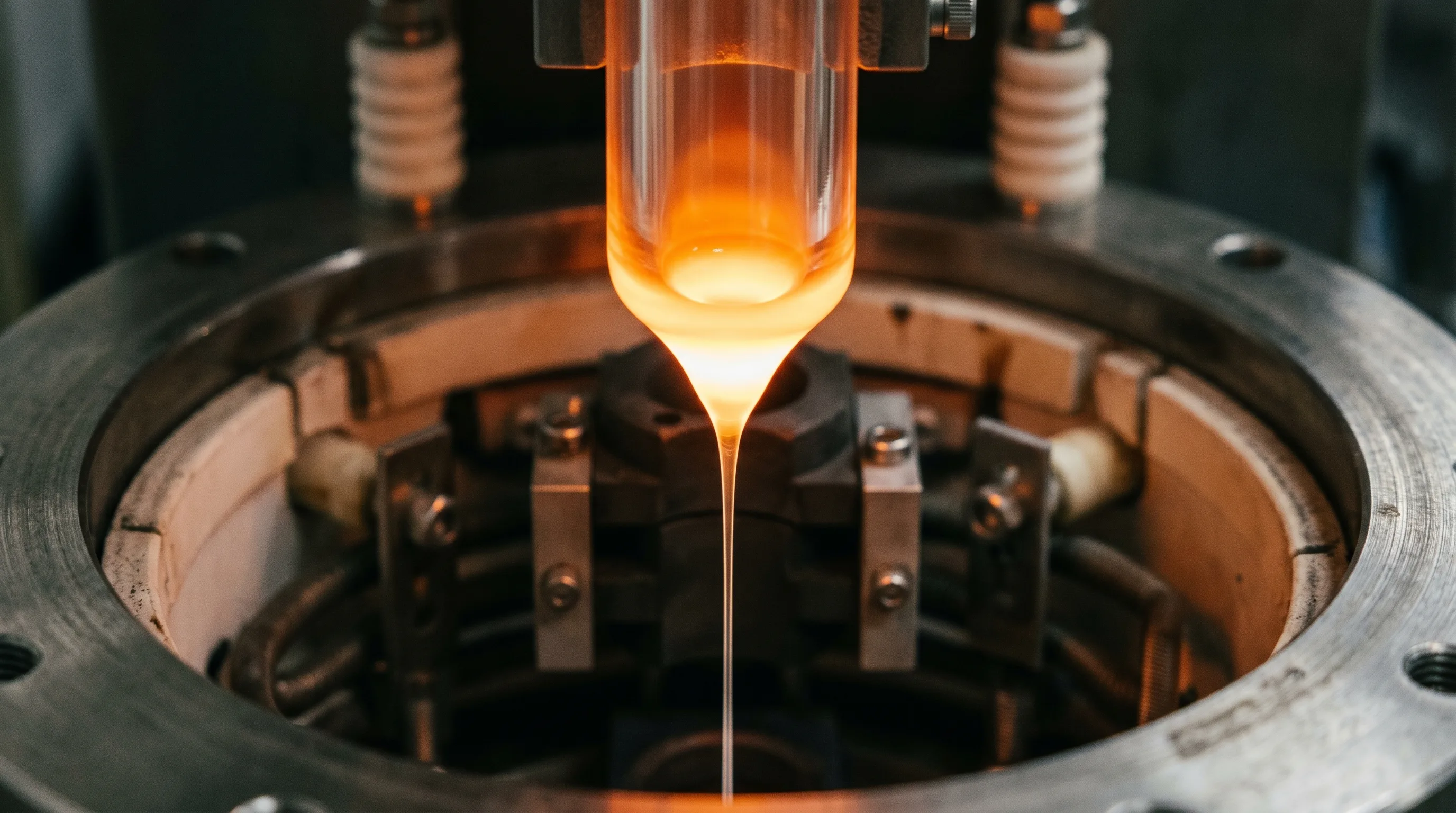
Only preforms meeting strict quality standards proceed to the next stage of fiber drawing and coating.
Why This Matters to You
The purification methods used ensure your fiber cable can carry data with minimal attenuation and maximum reliability, which directly translates to faster internet speeds and more stable connections. Environmental factors can still play a role in the field — see how temperature changes impact fiber performance for a closer look.
Why Should You Care About Raw Materials?
While you might never see or handle the raw silica or dopants, their quality directly impacts:
- Your internet speed and reliability
- How far signals can travel without boosters
- Longevity and durability of your fiber cables
Choosing cables made with premium raw materials ensures a smoother, faster experience for streaming, gaming, working remotely, or running smart home devices.
The raw materials — primarily ultra-pure silica and carefully chosen dopants — form the backbone of every fiber-optic cable's performance. Their quality is essential to reduce signal loss and maintain the high speeds you expect from fiber optic technology.
Next time you consider fiber cables, remember: it's what's inside that counts.
A quick recap of the material science at a glance: SiO₂ is the host glass, GeO₂ and P₂O₅ raise the core's refractive index so light stays guided, B₂O₃ and fluorine lower the cladding's index to seal that light in, and OH⁻ plus stray Fe/Cu/Cr impurities are actively engineered out by dry chemistry and vapor-phase deposition. The tools that do the engineering — CVD, MCVD, VAD and OVD — are all variations on the same idea: build the preform molecule by molecule so nothing the light doesn't want is ever in the glass.
If you want detailed specs or guidance on sourcing high-quality fiber cables, feel free to ask or visit trusted suppliers like TTI Fiber. You can also continue your deep-dive in our Cable Fundamentals series with the brief history of fiber optic cable.