The Brief History of Fiber Optic Cable

What Is the History of Fiber Optic Cable?
Fiber optic cables have become the cornerstone of modern telecommunications, providing the high-speed, high-capacity connections essential for today's digital world. Their development represents a remarkable journey from early theoretical concepts to the sophisticated technology that powers global communications. Here TTI Fiber explores the detailed history of fiber optic cables, tracing their evolution and highlighting the key milestones that have shaped their development. For a companion deep-dive into the glass chemistry behind every strand, see our guide on the raw materials of high-quality optical fiber glass.
Early Theories and Foundations
The journey of fiber optics begins with the study of light and optics, which dates back to ancient times. Sir Isaac Newton's work in the 17th century on the nature of light and color laid crucial groundwork for the understanding of optical phenomena. Newton's experiments with prisms and his theory of color helped establish the principles of light refraction and dispersion.
In the 19th century, James Clerk Maxwell's formulation of Maxwell's equations provided a theoretical framework for understanding electromagnetic waves, including light. These equations describe how electric and magnetic fields propagate through space, setting the stage for later developments in optical technology.
Development of Optical Fiber Concepts
The concept of guiding light through materials was explored in the 19th century by scientists such as Daniel Colladon and Jacques Babinet. They conducted experiments demonstrating that light could be guided through a stream of water, a phenomenon known as "internal reflection." This principle suggested that light could be confined within a medium, hinting at the potential for fiber optics.
In the early 20th century, researchers began to investigate the potential of using glass fibers for light transmission. The concept of using fibers for communication was still theoretical, but these early experiments laid the foundation for future developments in optical fiber technology. Curious why light stays trapped inside the core at all? Our piece on what can disrupt the light signal inside fiber unpacks the physics in plain language.
Birth of Modern Fiber Optics
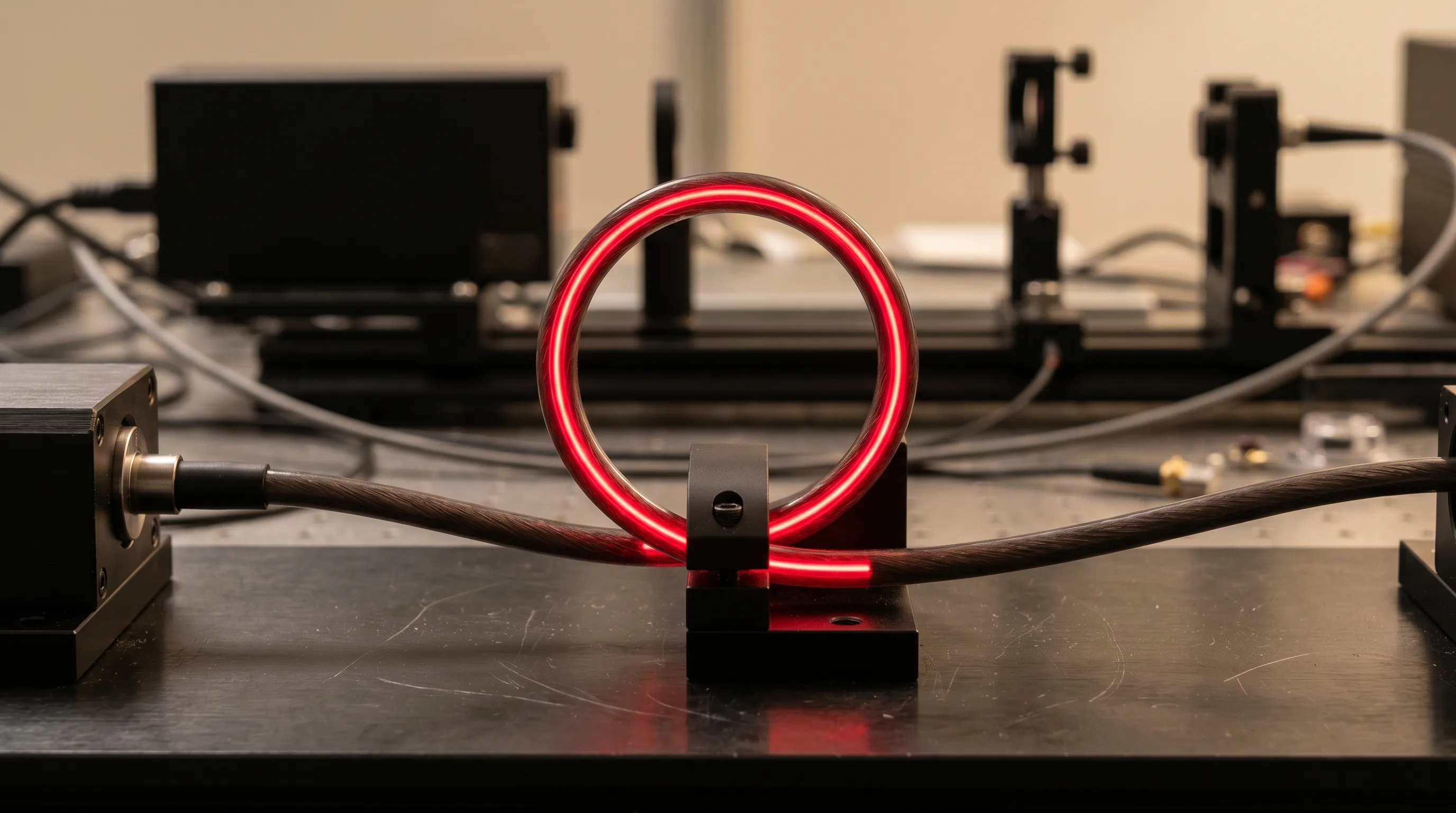
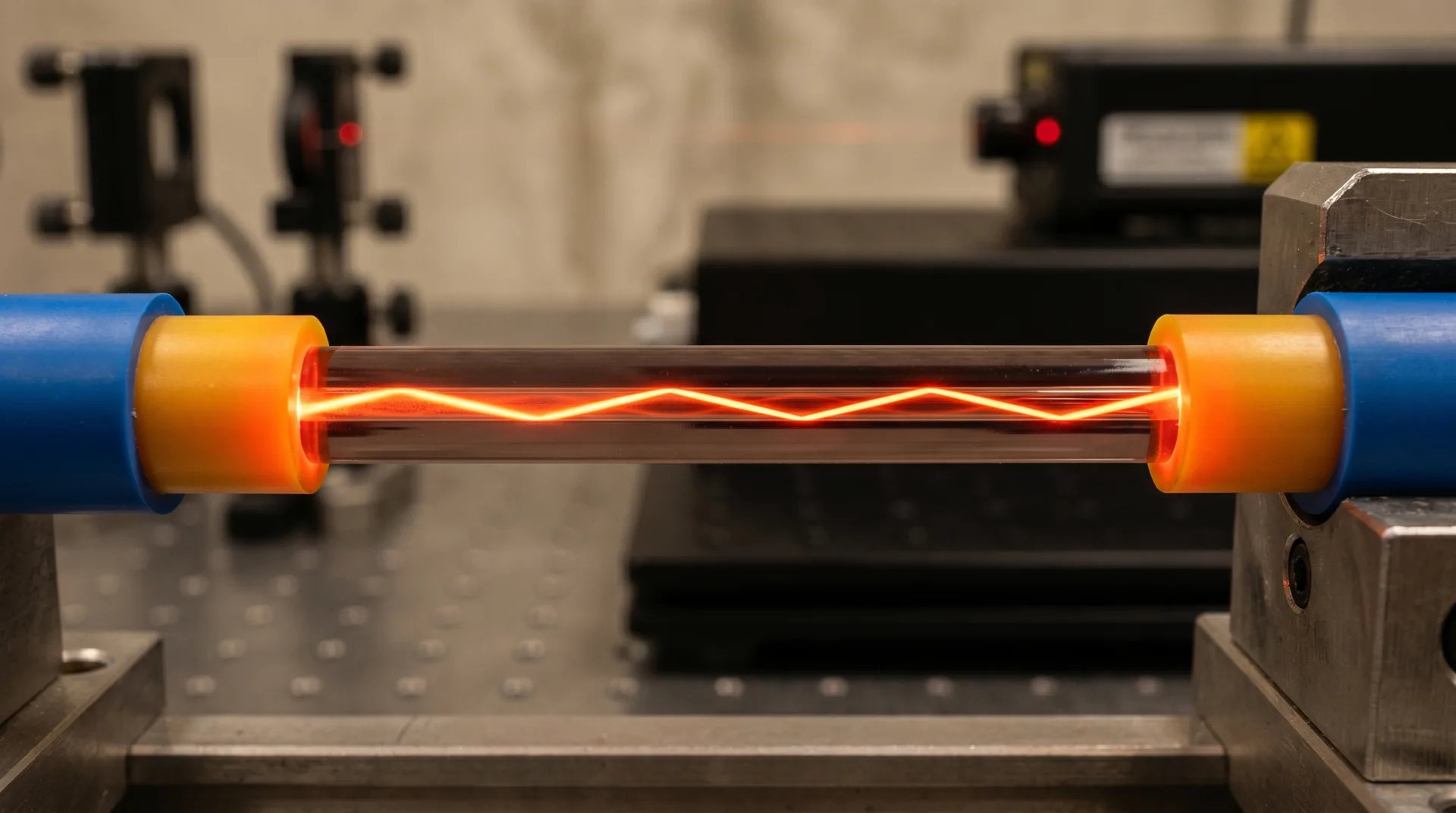
The modern era of fiber optics began in the 1960s with the development of practical optical fibers. Key to this was the discovery of total internal reflection, a principle that allows light to be guided through a medium by reflecting off its boundaries. This principle, demonstrated by scientists such as Hermann von Helmholtz and later refined by others, became the basis for fiber optic technology.
In 1970, researchers at Corning Glass Works, led by Robert D. Maurer, Donald Keck, and Peter C. Schultz, achieved a breakthrough by creating the first low-loss optical fiber. Their work resulted in a fiber with an attenuation rate of 20 decibels per kilometer, a significant improvement over previous attempts. This milestone marked the beginning of practical fiber optic communications.
Advancements in Fiber Optic Materials
Early optical fibers were made from glass and plastic, but their performance was limited by high signal loss and attenuation. The development of high-purity glass fibers, which reduced signal loss, was a significant advancement. Researchers began using materials like silica, which offered lower attenuation and better performance.
The introduction of doped fibers, such as those doped with germanium, further improved performance. These fibers allowed for more efficient light transmission and greater control over the fiber's optical properties. These advancements were crucial for expanding the capabilities and applications of fiber optics.
Breakthroughs in Fiber Optic Technology
One of the most significant breakthroughs in fiber optic technology was the development of low-loss fibers. In the 1970s, researchers developed fibers with attenuation rates of less than 1 decibel per kilometer, dramatically improving the efficiency of optical communication.
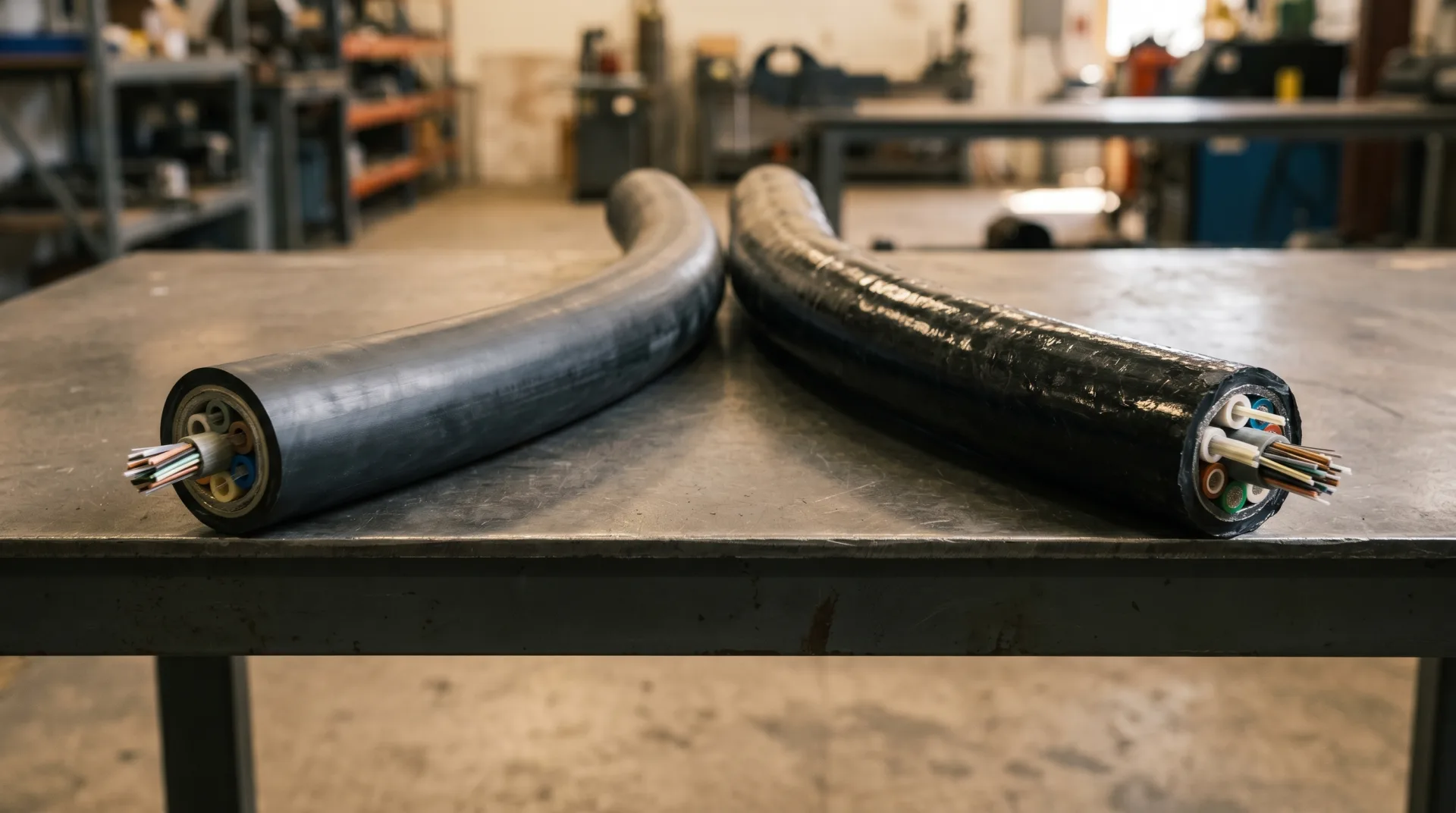
The introduction of single-mode fibers was another critical advancement. Unlike multi-mode fibers, which allowed multiple light paths and suffered from modal dispersion, single-mode fibers provided a single path for light transmission, enabling longer-distance communication with minimal distortion. This development was essential for long-haul telecommunications. The construction choices that followed also shaped modern cable design — see our comparison of tight-buffered and loose-tube fiber optic cables for a practical view.
Invention of Fiber Optic Amplifiers
The invention of erbium-doped fiber amplifiers (EDFAs) in the 1980s marked a transformative moment for fiber optic communications. EDFAs use erbium-doped fibers to amplify optical signals directly, bypassing the need for electronic regeneration. This innovation allowed for longer-distance transmission and higher capacity, revolutionizing the performance of fiber optic networks.
EDFAs enabled the expansion of global fiber optic networks, supporting the growing demand for high-speed data transmission. Their impact on the telecommunications industry was profound, facilitating the development of expansive and efficient optical networks.
Commercialization and Early Deployments
The commercialization of fiber optic technology began in the late 1970s and early 1980s. Early deployments of fiber optic networks were focused on telecommunications and broadcasting applications. Key players in this period included Corning, which developed the first commercially viable optical fibers, and AT&T, which was a pioneer in deploying fiber optic technology.
The first major commercial applications included long-distance telephone networks and high-capacity data links. These early networks demonstrated the potential of fiber optics to provide high-speed, reliable communication over long distances.
The Growth of Fiber Optic Infrastructure
The 1980s and 1990s saw rapid growth in fiber optic infrastructure, driven by the increasing demand for high-speed data transmission. Fiber optics became the standard for telecommunications networks, with widespread deployment across continents and major cities. This period marked a shift from experimental technology to a global communications infrastructure.
Significant projects during this time included the laying of transoceanic outdoor fiber optic cables, which connected different parts of the world and facilitated global communication. The expansion of fiber optic networks was driven by advancements in technology and the growing need for high-capacity data transmission. Field conditions along these routes still matter today — for example, temperature changes can influence fiber performance in measurable ways.
Technological Innovations and Improvements
Technological innovations continued to enhance fiber optic systems throughout the 2000s and beyond. Wavelength-division multiplexing (WDM) emerged as a key technology, allowing multiple signals to be transmitted simultaneously over a single fiber. This increased the capacity of fiber optic networks and enabled the support of high-bandwidth applications.
Advances in fiber optic components, such as connectors, splices, and transceivers, also contributed to improved system performance and reliability. These innovations enabled more efficient installation, maintenance, and operation of fiber optic networks.
Current Trends and Future Directions
Today, fiber optics are integral to a wide range of applications, including residential broadband, enterprise networks, and data centers. The trend toward fiber to the home (FTTH) has brought high-speed internet access to millions of households, improving connectivity and enabling new services.
Looking to the future, emerging technologies such as quantum communication and advanced fiber designs promise to push the boundaries of fiber optics. Researchers are exploring new types of fibers and innovative techniques to further enhance data transmission capabilities and address the evolving needs of the digital age.
The history of fiber optic cables is a testament to human ingenuity and technological advancement. From early theoretical concepts to the sophisticated systems of today, fiber optics have transformed global communications, providing the foundation for the internet, telecommunications, and beyond. As technology continues to evolve, fiber optics will remain at the forefront, driving innovation and shaping the future of connectivity.