Do Temperature Changes Really Impact Fiber Performance?
Do Temperature Changes Really Impact Fiber Performance?
At first glance, the answer seems obvious: "No — fiber uses light, not electricity, so temperature shouldn't matter." After all, we install fiber in deserts, arctic tundra, and undersea trenches without a second thought. It doesn't short-circuit in rain, and it won't overheat like copper.
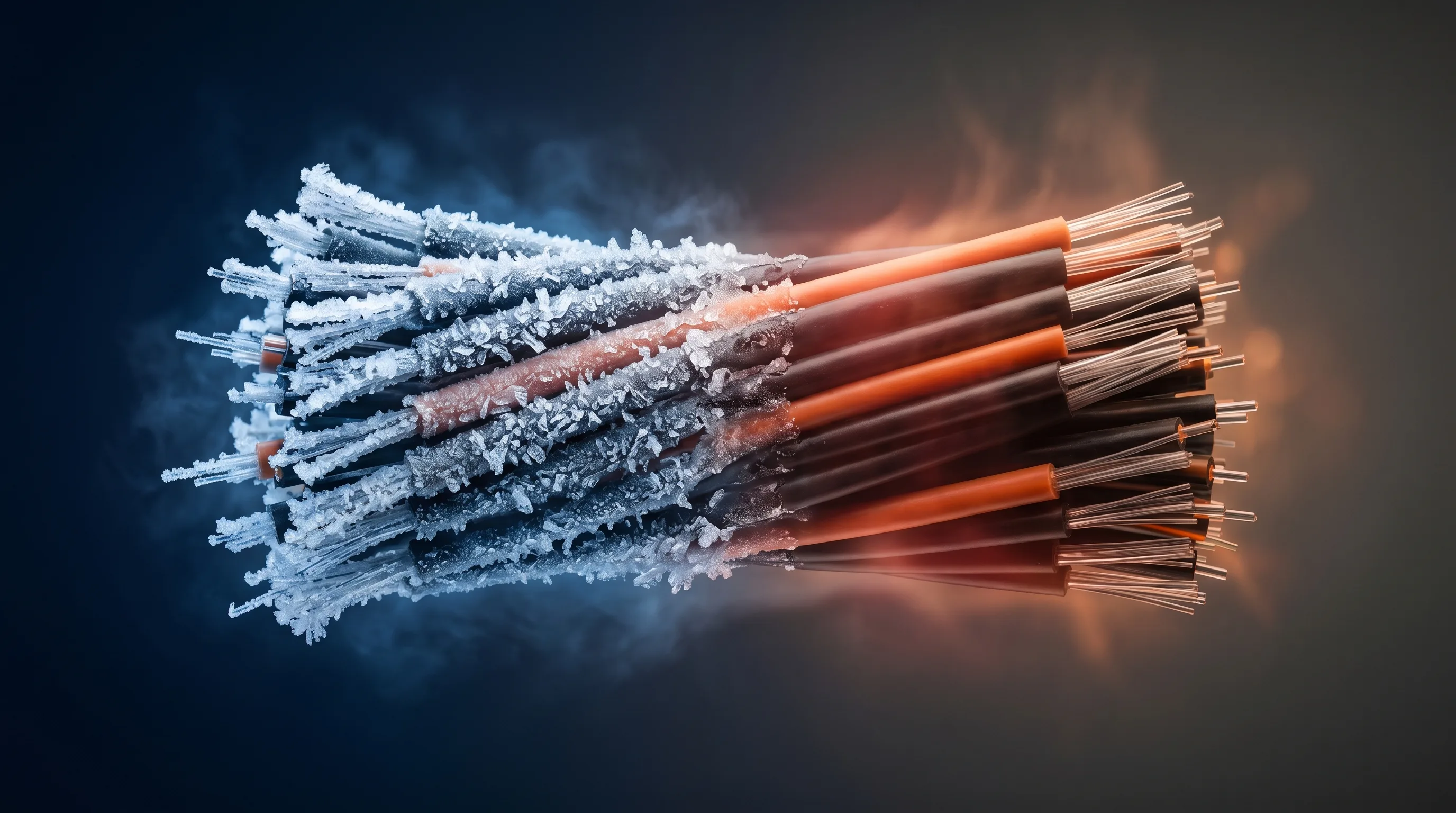
But this comforting narrative hides a more complex truth. While fiber optic cable is remarkably resilient, temperature changes do impact its performance — sometimes subtly, sometimes critically. The effects aren't electrical, but they are very real: rooted in thermodynamics, material science, and waveguide physics. Let's explore how — and why it matters to engineers, network planners, and infrastructure stewards. For a broader look at the environmental stressors around fiber, see our companion guide on what can interfere with fiber optic internet.
Isn't Fiber Just Glass? How Can Heat or Cold Affect Light?
Glass may seem inert, but silica — the primary component of optical fiber — is thermally active at the molecular level. Two key phenomena link temperature to optical performance:
- Thermo-optic effect: The refractive index of silica changes with temperature at a rate of approximately +8.6 × 10⁻⁶ /°C. This means that as temperature rises, light slows slightly in the core, altering its phase and propagation characteristics.
- Thermal expansion: Silica expands when heated (~0.55 ppm/°C). While small, this dimensional change affects the physical length of the fiber and the stress distribution within the cable structure.
In most short-reach or datacom applications, these shifts are negligible. But in precision systems — coherent transmission, interferometric sensors, or long-haul DWDM networks — even nanometer-scale phase drift can degrade signal integrity or increase bit error rates (BER).
So yes: light doesn't "feel" temperature, but the medium guiding it absolutely does. The same waveguide principles that let light stay inside the core in the first place are covered in our primer on whether anything can actually disrupt the light signal inside fiber.
Can Outdoor Fiber Really Fail Just Because It's Hot or Cold?
Not "fail" in the catastrophic sense — but performance can drift outside specification over extreme thermal cycles.
Consider an aerial fiber cable strung between poles in Arizona. Daytime temperatures may exceed 50°C (122°F), while nighttime drops to 5°C (41°F). Over a 10-km span, this 45°C swing causes:
- A ~5.5 mm physical elongation due to thermal expansion.
- A refractive index shift that changes the optical path length by microns.
In standard telecom links, this is absorbed by system margin. But in phase-sensitive applications — like distributed acoustic sensing (DAS) or coherent 400G+ transmission — these changes manifest as phase noise or timing jitter, requiring real-time compensation via digital signal processing (DSP).
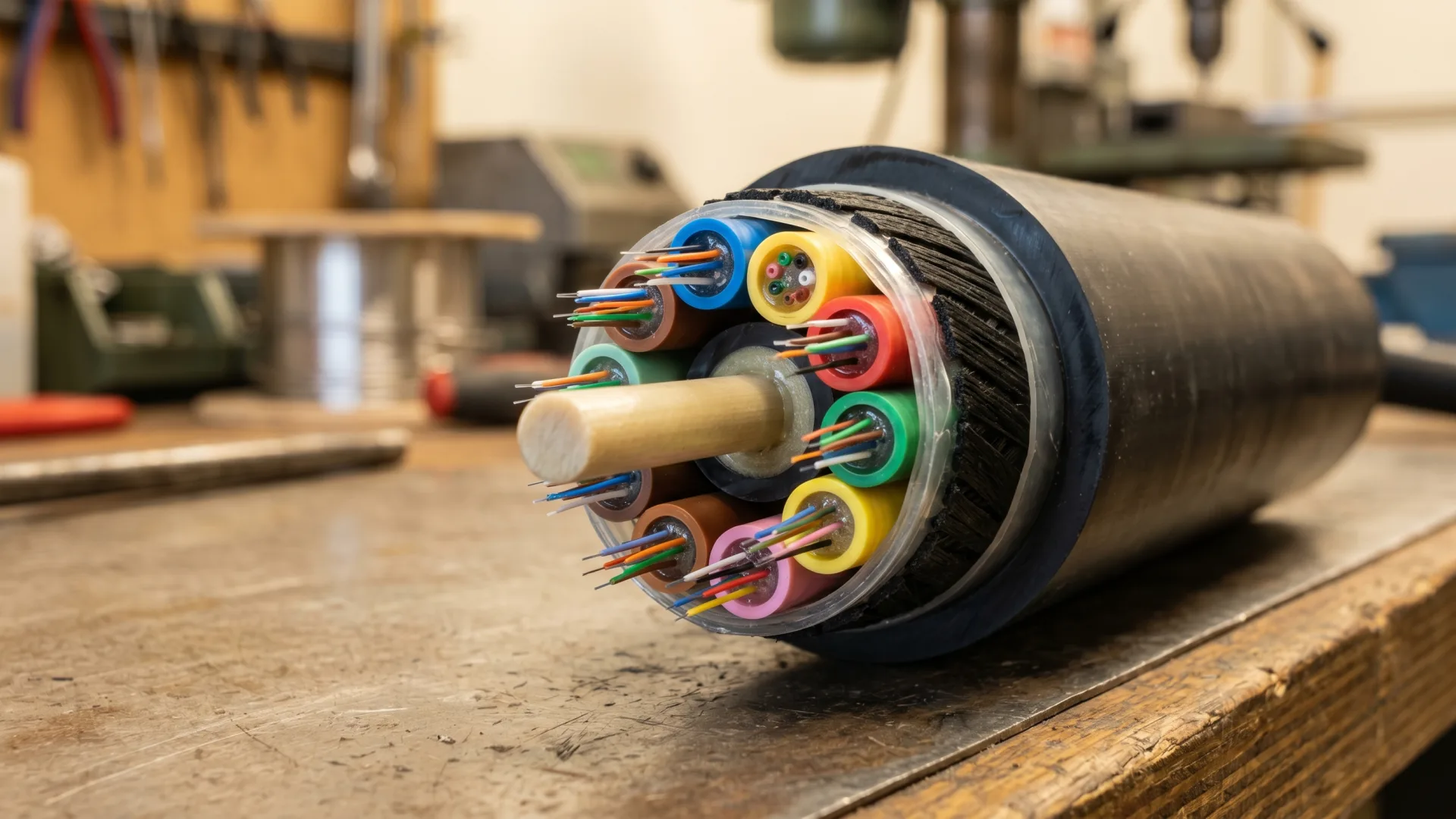
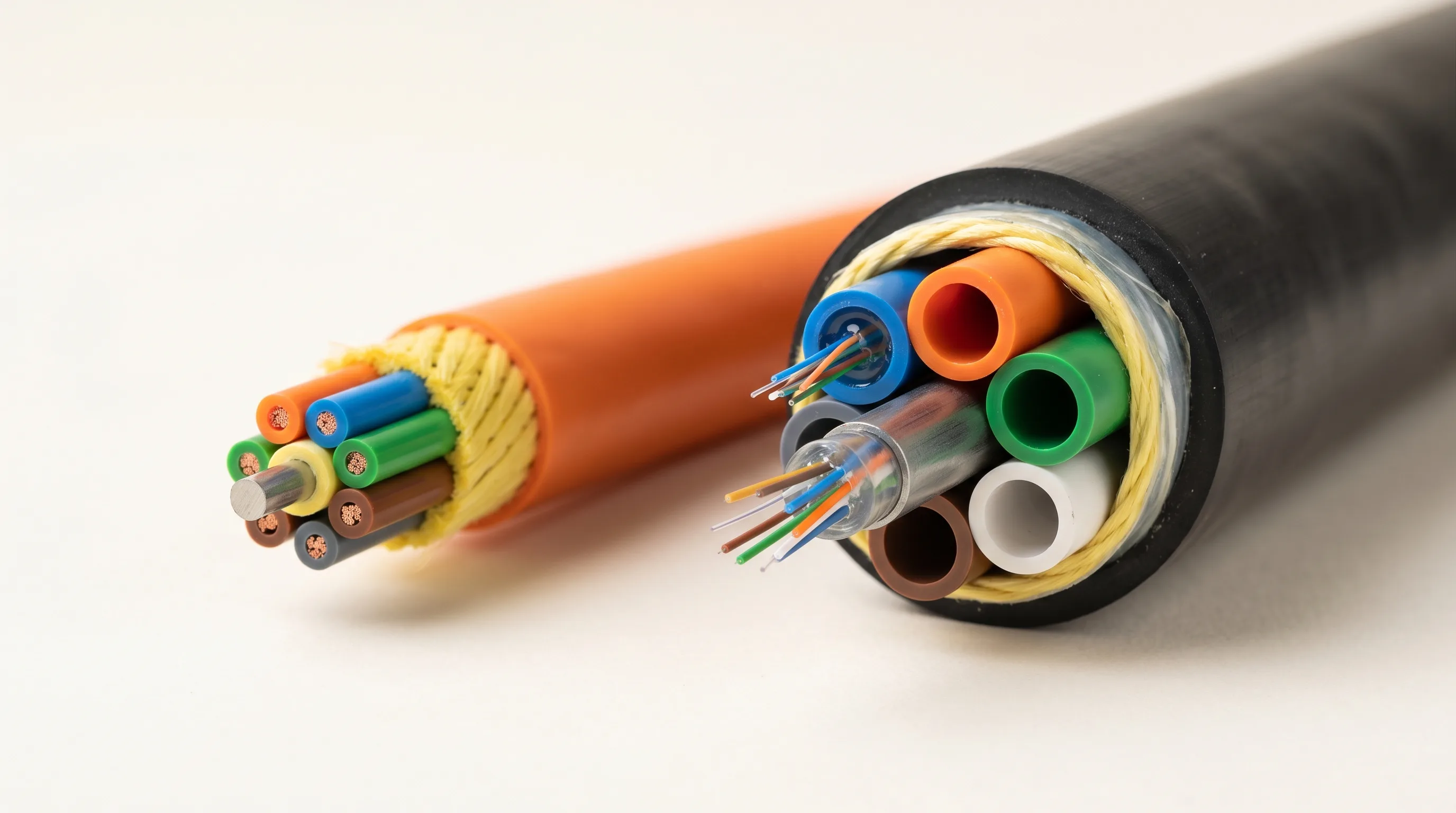
More critically, differential expansion between fiber, buffer tubes, strength members (e.g., aramid yarn or fiberglass rods), and the outer jacket can induce microbending loss. If the cable design doesn't accommodate thermal movement — through loose-tube buffering or water-blocking gels — repeated cycling fatigues the fiber, increasing attenuation over years. To understand why buffering choice matters so much, see our deep-dive on tight-buffered vs loose-tube fiber optic cables.
This is why outdoor plant (OSP) cables undergo rigorous thermal cycling tests per Telcordia GR-20: to ensure performance stability from –60°C to +85°C. Our own outdoor fiber optic cable portfolio is qualified across that range.
What About Data Centers? Isn't Indoor Fiber Safe?
Indoor fiber avoids weather extremes, but localized thermal gradients still matter — especially in high-density environments.
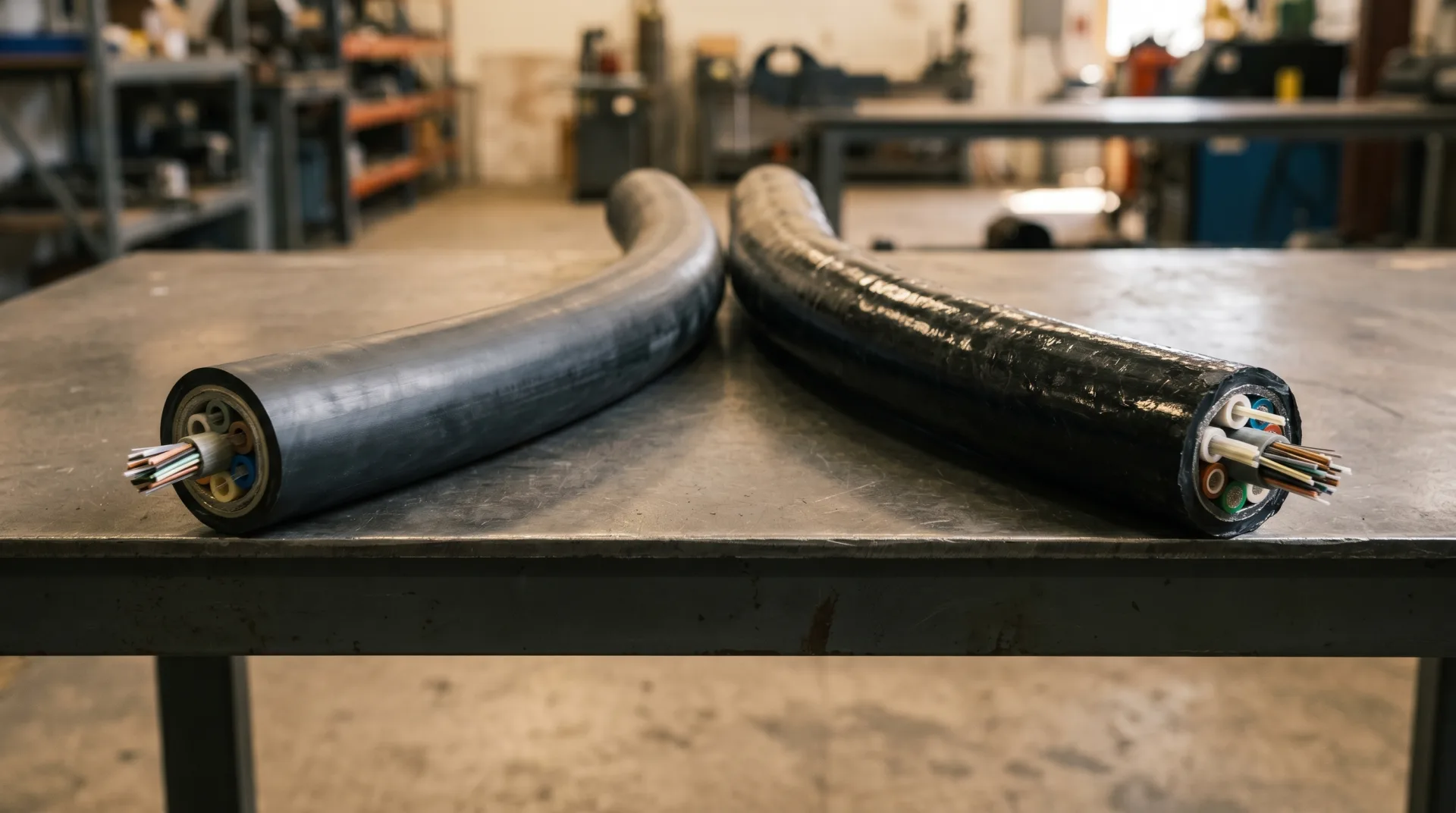
- Hot aisles in data centers can reach 40–45°C near switch exhausts. If fiber patch cords are routed too close to heat sources, the coating may soften, increasing susceptibility to microbending under cable tie pressure.
- Thermal transients during equipment startup/shutdown create temporary stress, particularly in tight-buffered cables where the polymer layer expands more than glass.
While unlikely to cause immediate failure, chronic exposure accelerates coating degradation and can contribute to long-term reliability issues — especially in bend-insensitive fibers (ITU-T G.657.A1/B3), whose nano-engineered trench structures are sensitive to mechanical perturbation.
Best practice? Keep fiber away from heat exhausts, avoid over-tightening ties, and use temperature-rated indoor/outdoor (I/O) cables for riser or plenum runs near HVAC systems.
Do Temperature Swings Affect Fiber Splices and Connectors?
Yes — especially in uncontrolled environments like manholes, poles, or remote cabinets.
- Fusion splices are generally stable, but if the splice protector (heat-shrink sleeve) isn't fully sealed, moisture ingress combined with thermal cycling can cause long-term stress corrosion at the splice point.
- Connectors are more vulnerable. Thermal expansion mismatches between ceramic ferrules (zirconia), metal housings, and polymer boots can create micro-gaps or angular misalignment during temperature swings. In single-mode systems, this increases insertion loss and back reflection — particularly problematic for analog RFoG or PON networks using DFB lasers sensitive to optical return loss (ORL).
Field studies show connector loss can vary by 0.1–0.3 dB over a –40°C to +75°C range — enough to push a marginal link over the edge in high-split PON architectures.
Solution? Use angled physical contact (APC) connectors to minimize back reflection, and ensure all terminations are protected in temperature-stable enclosures.
Is There a "Safe" Temperature Range for Fiber?
Fiber itself can operate from –270°C (near absolute zero) to over 800°C (in specialty high-temp fibers). But standard telecom fiber (G.652.D) is qualified for –60°C to +85°C in cable form — per industry standards like IEC 60794 and Telcordia GR-20.
"Operation" doesn't mean "optimal performance." Key thresholds to note:
- Below –40°C: Acrylate coatings become brittle, increasing fracture risk during handling.
- Above +70°C: Polymer coatings and cable jackets begin to soften, reducing mechanical protection.
- Rapid cycling (>10°C/hour): Induces fatigue in poorly buffered cables, accelerating microbending.
For extreme environments — oil & gas downhole, aerospace, or cryogenic labs — specialty fibers are used:
- Hermetically coated fibers (carbon or metal) resist hydrogen and moisture at high temps.
- Polyimide-coated fibers withstand up to 300°C continuously.
- Fluoride or chalcogenide fibers operate in mid-IR ranges for sensing — but are fragile and expensive.
For 99% of deployments, standard fiber suffices — but only if installed within its thermal design envelope. For reference, the following table summarizes the key temperature thresholds discussed above.
| Regime | Threshold / Range | What Happens |
|---|---|---|
| Cable operating envelope (G.652.D per IEC 60794 / Telcordia GR-20) | –60°C to +85°C | Qualified range for standard telecom OSP cable in service |
| Acrylate coating brittleness | Below –40°C | Coatings turn brittle; handling fracture risk rises |
| Polymer jacket softening | Above +70°C | Jackets and coatings soften; mechanical protection drops |
| Rapid thermal cycling | >10°C / hour | Fatigues poorly buffered cables; accelerates microbending |
| Polyimide-coated specialty fiber | Up to +300°C continuous | Used in downhole, aerospace, and high-temp sensing |
| Bare silica fiber (no cable) | –270°C to >800°C | Material limit; only specialty high-temp fibers reach the upper end |
How Do Engineers Compensate for Temperature Effects in Practice?
Smart design anticipates thermal behavior. Common strategies include:
- Loose-tube cable architecture: Fiber floats freely in gel-filled tubes, decoupling it from jacket expansion.
- Strain relief elements: Central strength members (e.g., fiberglass rods) absorb thermal stress.
- Dispersion and phase tracking: In coherent systems, DSP algorithms continuously compensate for thermally induced phase drift.
- Thermal monitoring: In critical links (e.g., submarine cables), distributed temperature sensing (DTS) via Raman scattering detects hotspots or burial anomalies.
Perhaps most importantly: derating link budgets. Engineers don't design to the theoretical minimum loss — they include thermal margin (often 0.5–1.0 dB) to account for worst-case environmental conditions over the system's 20–25 year lifespan.
So — Should We Worry About Temperature in Fiber Networks?
Not with alarm — but with respectful awareness.
Temperature won't cause your home internet to drop during a heatwave. But in long-haul, high-speed, or mission-critical networks, thermal effects are a legitimate design factor. They don't break fiber outright; they erode margins, introduce noise, and accelerate aging — often invisibly, until a cascade of small degradations triggers a failure.
The best networks aren't those that ignore physics, but those that design with it. That means choosing the right cable for the environment, validating thermal performance during installation, and monitoring not just signal strength — but the silent, steady influence of the world around the fiber. For a historical lens on how outdoor cable design evolved to cope with these realities, our brief history of fiber optic cable is a useful companion read.
Fiber Doesn't Live in a Vacuum — It Lives in Our World
We often treat fiber as a pristine, abstract conduit — light in a perfect tube. But in reality, it's buried in soil, lashed to poles, coiled in server racks, and exposed to sun, snow, and steam. It breathes with the seasons, expands with the day, and contracts in the night.
And that's not a flaw. It's a reminder that even our most advanced technologies are part of the physical world — subject to its laws, shaped by its forces, and sustained by our understanding of them.
So yes: temperature changes do impact fiber performance. But with knowledge, foresight, and good engineering, they need never compromise it.