What Can Interfere with Fiber Optic Internet
What Can Interfere with Fiber Optic Internet — and Why It's (Mostly) Not What You Think?
Fiber optic internet is often hailed as the gold standard of connectivity: blazing fast, low-latency, and seemingly immune to the gremlins that plague copper cables. But is it truly invincible? If your gigabit connection suddenly stutters, is it the fiber — or something else entirely?
The truth is more nuanced. While fiber optics are inherently resistant to most traditional forms of interference, they're not magic. Understanding what can and cannot disrupt them — and why — reveals both the brilliance of the technology and the hidden vulnerabilities in the systems around it. Let's untangle the myth from the reality, one question at a time. For a closer look at whether external fields ever reach the light itself, see our companion piece on whether anything can actually disrupt the light signal inside fiber.
What Makes Fiber Optic Cables So Resistant to Interference in the First Place?
Unlike copper wires that transmit data as electrical signals, fiber optic cables use pulses of light — typically infrared — traveling through ultra-pure glass or plastic strands. This fundamental difference changes everything.
Because light isn't an electric current, fiber is immune to electromagnetic interference (EMI) and radio frequency interference (RFI). You can run a fiber cable right next to a high-voltage power line, a microwave oven, or an MRI machine, and it won't pick up noise. There's no crosstalk between fibers, even when tightly bundled. And since no electricity flows through the core, fiber is also non-conductive, eliminating ground loops and lightning-induced surges (though the endpoints are still vulnerable).
This inherent immunity is why fiber dominates in hospitals, industrial plants, and military installations — environments where EMI would cripple copper networks.
So… Can Anything Actually Disrupt the Light Signal Inside the Fiber?
Yes — but not in the way most people imagine. The light itself isn't "interfered with" by external fields. Instead, signal degradation arises from physical disturbances to the fiber or imperfections in the optical path. These fall into three main categories:
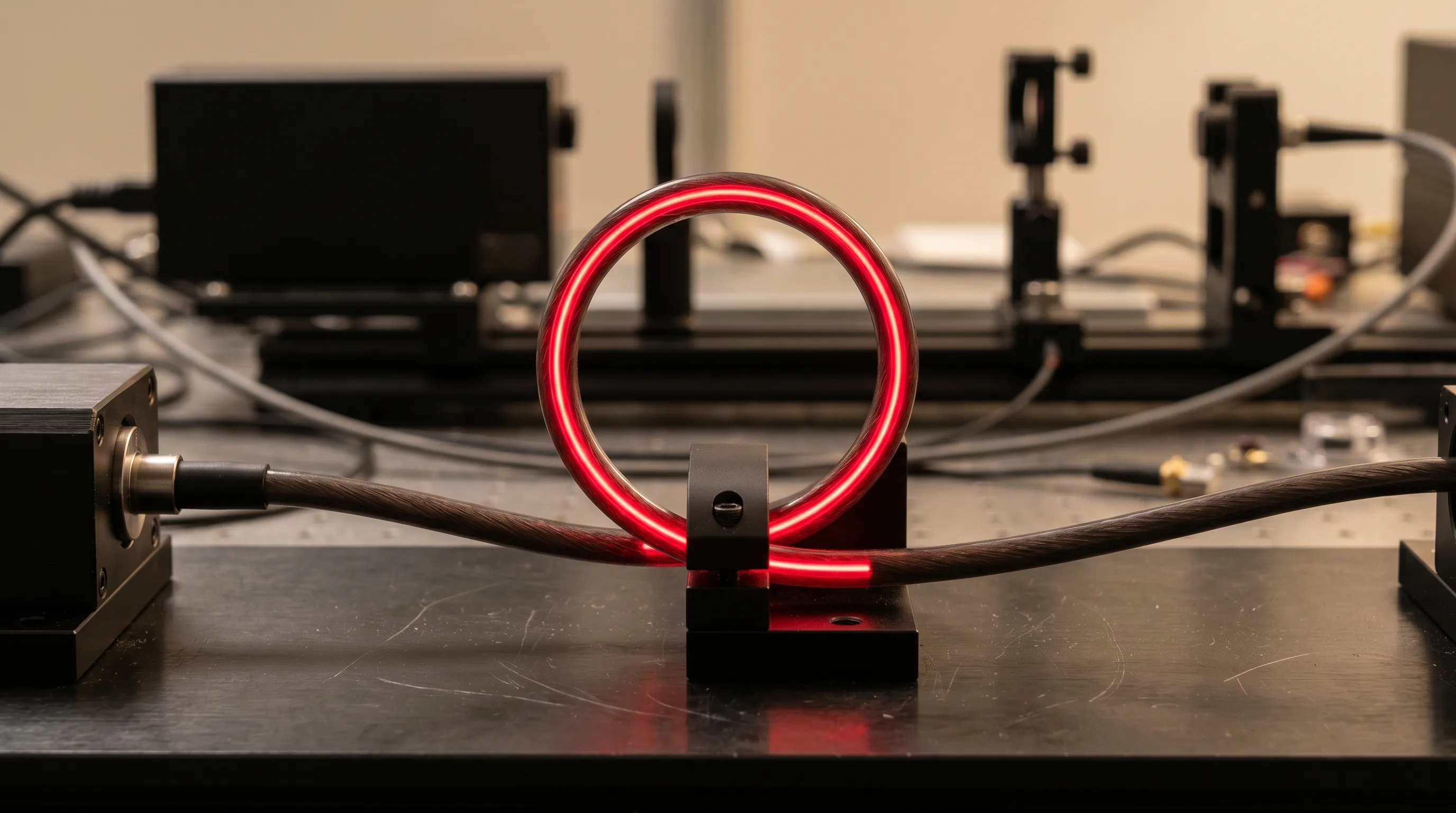
1. Macrobending and Microbending Losses
- Macrobending: Occurs when the fiber is bent beyond its minimum bend radius (often 10–30 mm for single-mode fiber). Light leaks out at the curve, causing attenuation.
- Microbending: Tiny, repetitive deformations — caused by pressure from cable ties, crushed conduits, or temperature-induced expansion — scatter light at a microscopic level.
Both increase insertion loss, reducing signal strength. In severe cases, the optical network terminal (ONT) may lose sync entirely.
2. Contamination and Connector Issues
A single speck of dust on a fiber connector can block or scatter light. Common culprits:
- Poorly mated LC or SC connectors
- Dirty end-faces (from improper handling or unsealed ports)
- Scratches or pits on the ferrule
This is the #1 cause of field failures in fiber networks — yet it's entirely preventable with proper cleaning and inspection (using a fiber scope).
3. Fiber Breaks or Cracks
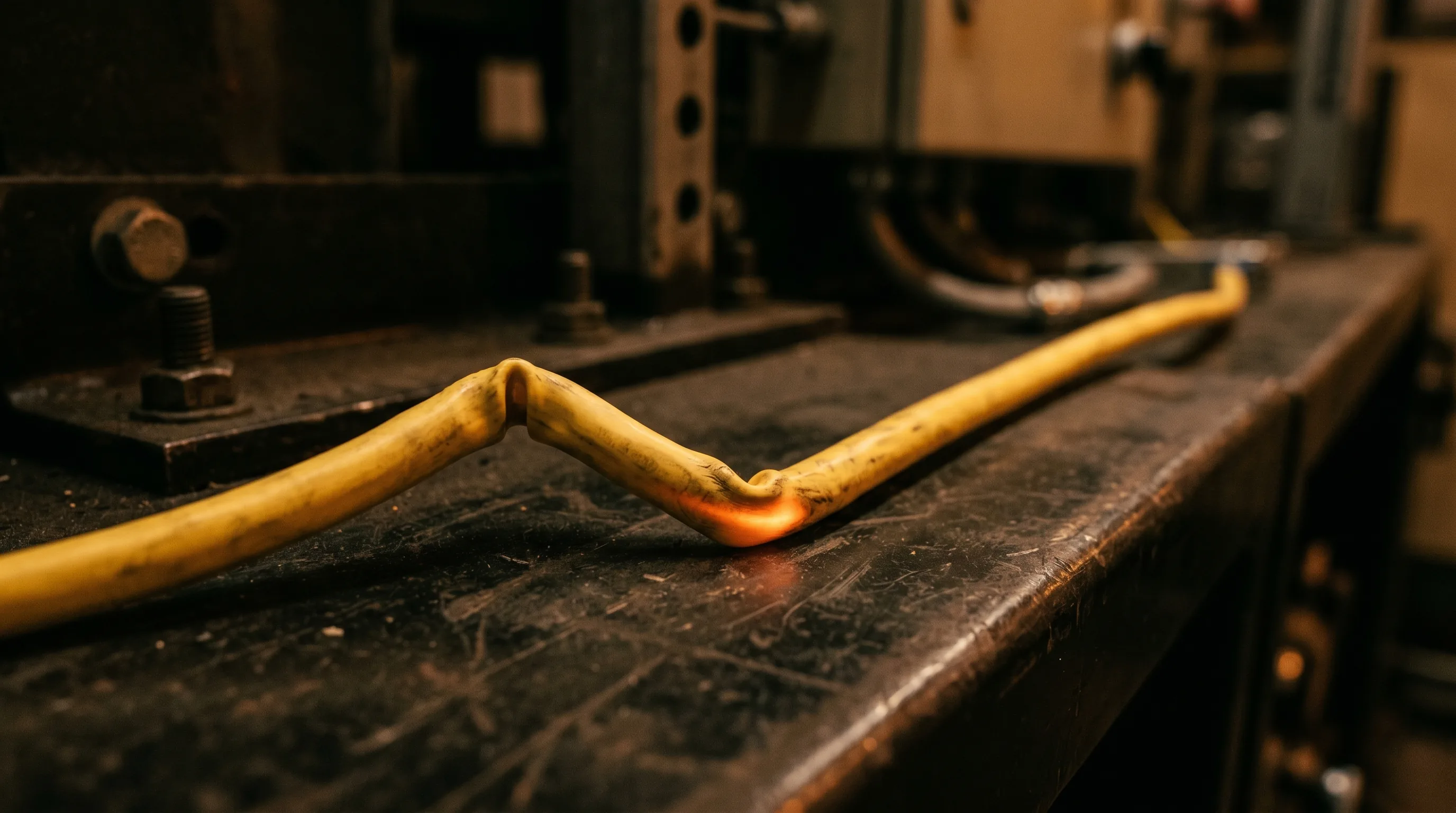
Physical damage — from backhoes ("backhoe fade"), rodents, excessive tension during installation, or even repeated flexing — can fracture the glass. Even hairline cracks cause significant signal loss or total outage.
Unlike copper, which might degrade gradually, fiber often fails catastrophically: full signal one moment, nothing the next.
What About Environmental Factors — Heat, Cold, or Moisture?
Fiber itself is remarkably stable across extreme conditions:
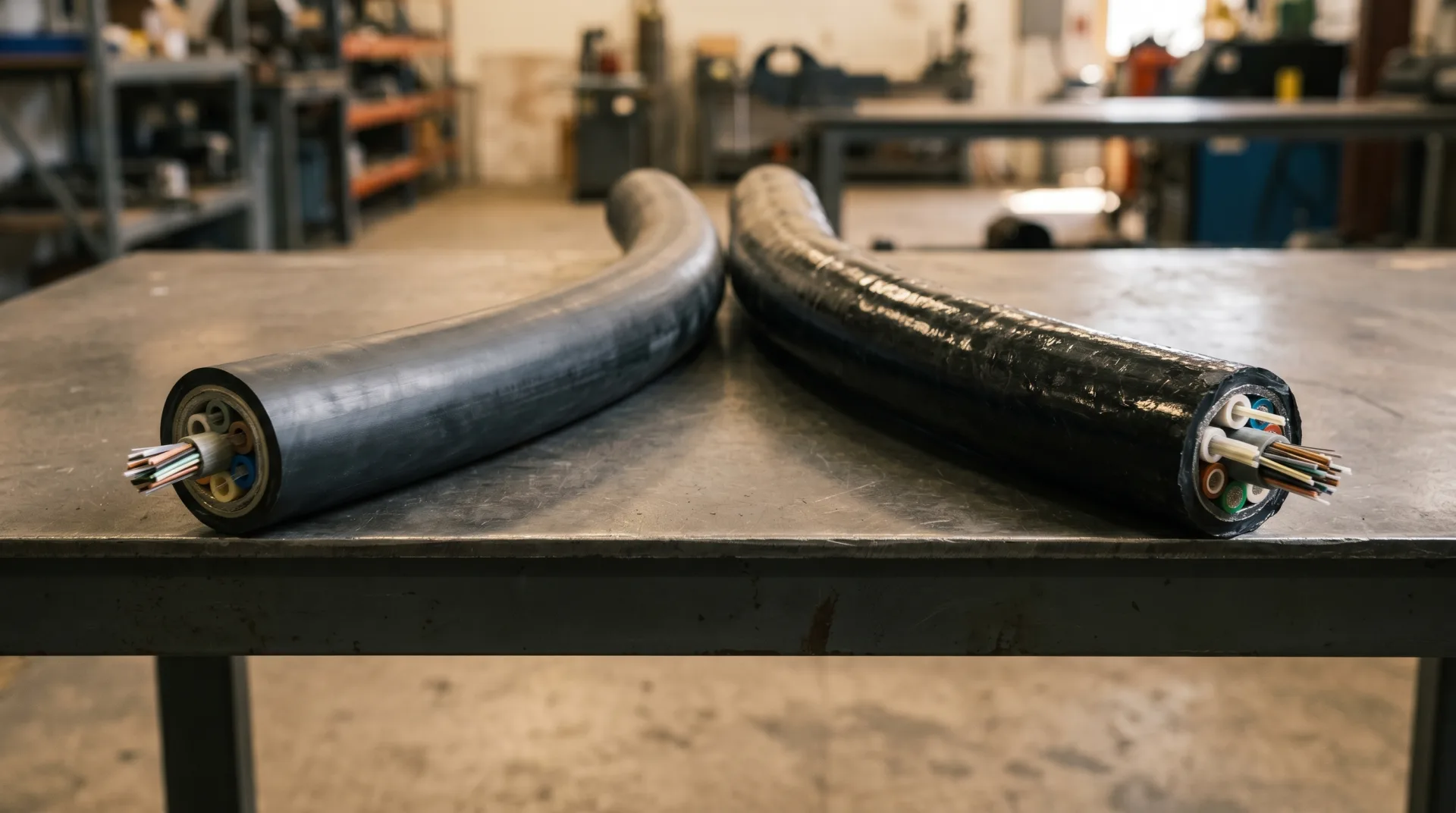
- Temperature: Glass fibers operate reliably from –60°C to +85°C. However, the cable jacket and buffer materials can expand/contract, inducing microbends in poorly designed cables. For a deeper look at thermal behavior, see whether temperature changes really impact fiber performance.
- Moisture: Water doesn't affect the glass core, but if it penetrates the cable sheath (e.g., due to damaged armor), it can freeze in cold climates, exerting pressure that bends or cracks fibers. High-quality outdoor cables use water-blocking gel or dry tapes to prevent this.
- Radiation: In nuclear or space applications, prolonged ionizing radiation can cause "darkening" of the glass, increasing attenuation — but this is irrelevant for consumer or enterprise use.
So while the environment can indirectly affect performance, modern fiber cables are engineered to withstand decades of outdoor exposure. TTI Fiber's outdoor fiber optic cable range uses gel-filled and dry-core designs specifically to block moisture ingress in harsh climates.
Can Electromagnetic Pulses (EMPs) or Solar Flares Knock Out Fiber?
This is a common concern — but largely a myth for the fiber itself. Since fiber carries light, not electricity, it's immune to EMPs, geomagnetic storms, and lightning-induced surges along the cable run.
However — and this is critical — the electronic endpoints are not. The optical line terminal (OLT) at the provider's hub and your optical network terminal (ONT) at home both require power and contain sensitive electronics. A nearby lightning strike or grid surge can fry these devices, taking your connection down — even though the fiber remains intact.
That's why surge protectors and UPS backups for ONTs are wise investments in storm-prone areas.
What About "Signal Interference" from Other Fiber Cables or Light Sources?
In theory, light from one fiber shouldn't leak into another. In practice, crosstalk in fiber is virtually nonexistent under normal conditions because:
- Each fiber is individually buffered and jacketed
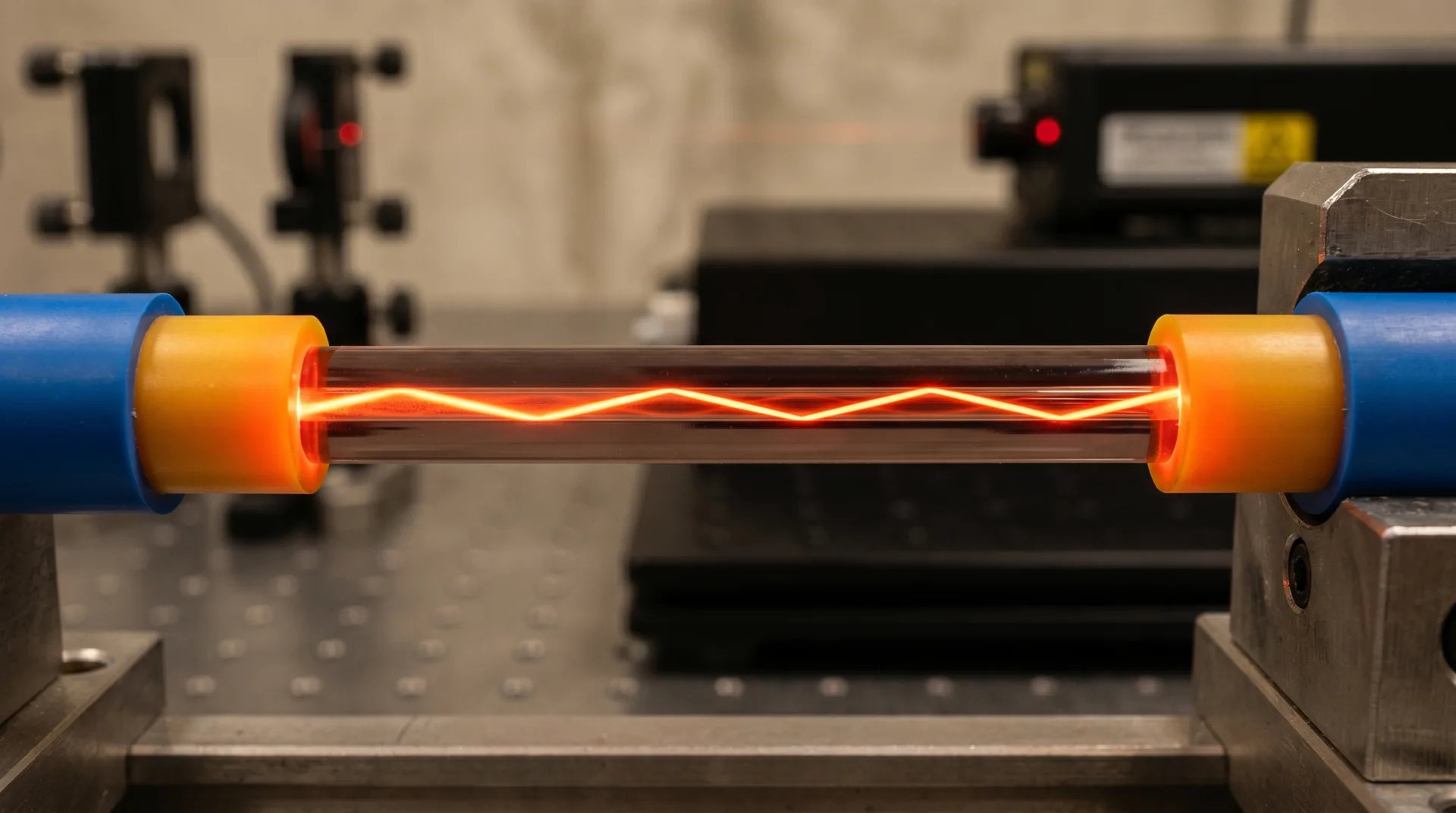
- Light is confined by total internal reflection within the core
- Wavelengths are tightly controlled (e.g., 1310 nm, 1490 nm, 1550 nm in GPON)
However, in passive optical networks (PONs) like FTTH (Fiber to the Home), multiple users share the same fiber strand using wavelength division multiplexing (WDM). If a splitter is faulty or a transmitter emits at the wrong wavelength, it could cause interference — but this is a network design or equipment failure, not external interference.
Similarly, shining a bright flashlight into a broken fiber end won't "jam" the signal — it just adds incoherent noise that the receiver easily filters out.
Could My Wi-Fi Router or Smart Home Devices Be Causing Fiber Issues?
Almost certainly no — but the confusion is understandable. Here's the key distinction:
- Fiber brings the signal to your home (to the ONT).
- Your Wi-Fi router converts that signal to wireless for your devices.
If your internet is slow, but wired devices connected directly to the ONT or router perform fine, the problem lies in your Wi-Fi network — not the fiber. Common culprits:
- Channel congestion from neighboring networks
- Physical obstructions (walls, metal)
- Outdated router firmware or hardware
- Too many devices competing for bandwidth
In short: fiber delivers the pipe; Wi-Fi is the faucet. Don't blame the pipeline for a clogged tap.
What Are the Most Common Real-World Causes of Fiber Internet Outages?
Despite its robustness, fiber networks do fail — and the reasons are often mundane:
| Cause | Frequency | Prevention/Mitigation |
|---|---|---|
| Dirty or damaged connectors | Very High | Inspect & clean with certified tools; use dust caps |
| Excessive bending during install | High | Follow bend radius specs; use service loops |
| Backhoe cuts / construction damage | Medium (but high impact) | Call 811 before digging; use buried conduit |
| Faulty ONT or OLT hardware | Medium | Firmware updates; surge protection |
| Water ingress in outdoor cables | Low (with quality cable) | Use gel-filled or dry-core outdoor-rated fiber |
| Rodent chewing | Low (but regional) | Armored cable in vulnerable areas |
Notably absent from this list: EMI, RFI, weather (rain/snow), or household electronics — all of which plague copper but leave fiber untouched.
How Can I Tell If the Problem Is Really the Fiber?
Use this diagnostic flow:
- Check wired vs. wireless: Plug a laptop directly into the ONT/router. If speed is normal, the issue is Wi-Fi.
- Inspect the ONT lights: No "optical" or "PON" light? Likely a fiber signal loss.
- Test with a known-good device: Eliminates local hardware issues.
- Call your ISP: They can remotely check optical power levels (measured in dBm). Healthy range: –8 dBm to –27 dBm. Below –30 dBm: marginal or failing link. No signal: break, severe bend, or dirty connector.
Field technicians often use an optical time-domain reflectometer (OTDR) to pinpoint breaks or bends kilometers down the line — like radar for light.
Why Does This Misconception About Fiber "Interference" Persist?
Because we're conditioned by decades of copper-based networking, where interference is real and constant. We blame microwaves for Wi-Fi drops, power lines for DSL noise, and thunderstorms for modem resets. So when fiber falters, we instinctively look for a similar "invisible enemy."
But fiber operates on different physics. Its vulnerabilities are mechanical and optical, not electromagnetic. Recognizing this shift in mindset is key to troubleshooting — and appreciating why fiber is the backbone of our digital future.
So — Should I Worry About Interference with My Fiber Internet?
In a word: no — not in the way you're probably imagining.
Fiber optic internet is one of the most resilient communication technologies ever deployed. It laughs at thunderstorms, ignores your microwave, and couldn't care less about your neighbor's baby monitor. Its real enemies are dust, bends, breaks, and bad connectors — all of which are preventable with proper handling and quality installation.
That said, the electronics at either end remain vulnerable to power surges, software bugs, and hardware failure. So while the fiber strand itself is nearly invincible, the full system isn't.
And that's the nuanced truth: fiber doesn't eliminate outages — it just moves the failure points from the cable to the edges. Understanding that distinction isn't just technical trivia; it's the key to faster fixes, smarter upgrades, and peace of mind in our hyperconnected world. If dust, bends, and bad terminations are the real enemy, it pays to start with quality hardware — explore TTI Fiber's FTTH drop cable and learn how tight-buffered vs loose-tube construction affects resilience.
Now you know: when your fiber internet stumbles, don't look for ghosts in the electromagnetic ether. Look for dust on a connector, a kink in the cable, or a storm-fried ONT. The light is fine — it's everything around it that needs attention.