Difference Between MDPE and HDPE of Fiber Optic Cables
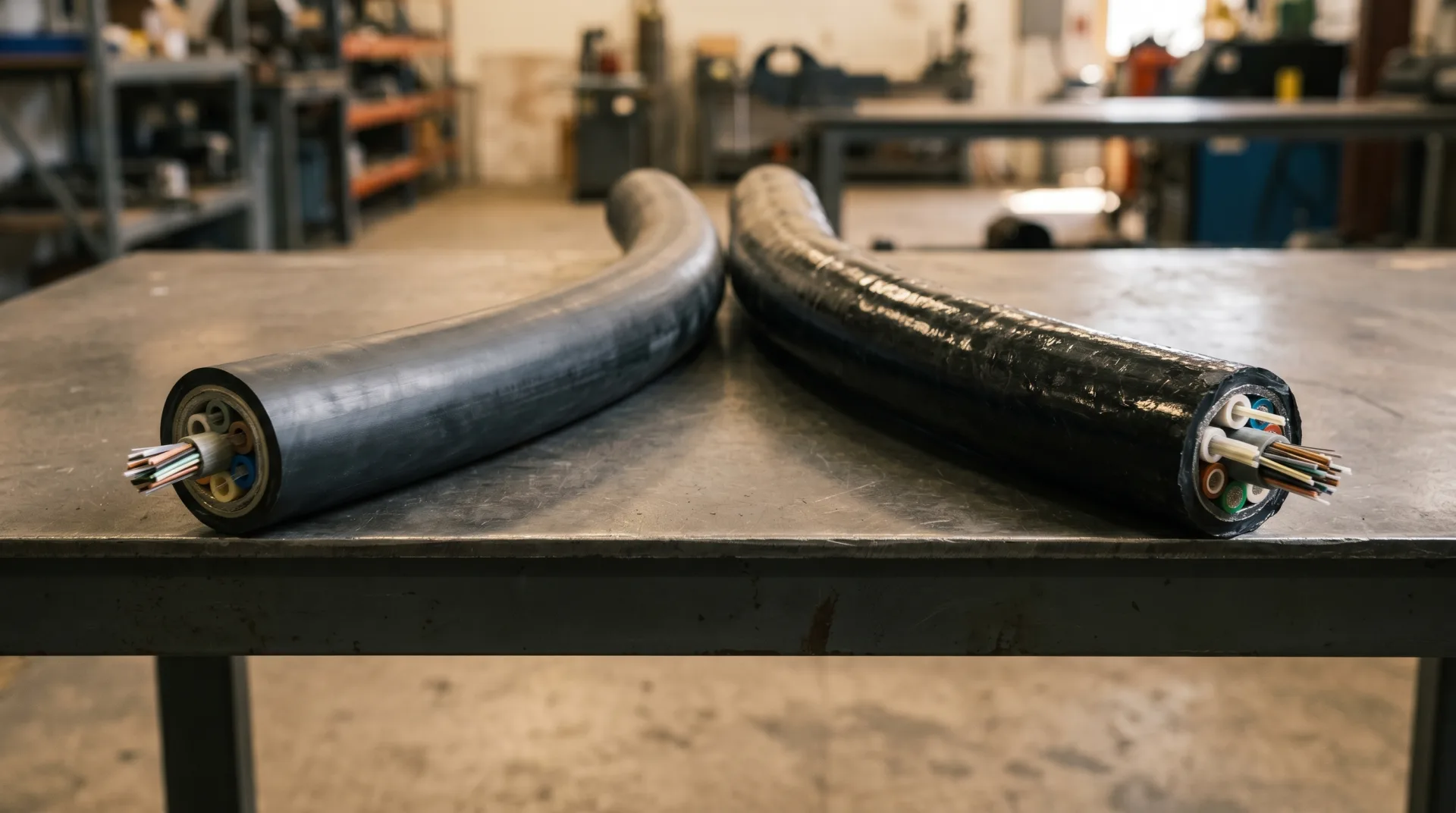
MDPE vs. HDPE Outer Jacket of Fiber Optic Cables
When we talk about fiber optic cables, much attention goes to the glass inside — the core, the cladding, the coatings. But the unsung hero protecting that delicate light-guiding structure is the outer jacket. And in outdoor and direct-buried applications, two materials dominate: MDPE (Medium-Density Polyethylene) and HDPE (High-Density Polyethylene).
At first glance, they seem interchangeable — both are tough, black, UV-resistant plastics wrapped around fiber bundles. But beneath the surface, their molecular structures, mechanical behaviors, and environmental responses differ in ways that directly impact cable longevity, installation safety, and network reliability.
So what really sets them apart — and how do you choose the right one for your project? For a broader primer on cable construction concepts, see our companion guide on tight-buffered vs. loose-tube fiber optic cables.
What Exactly Are MDPE and HDPE — and How Do Their Molecular Structures Differ?
Both MDPE and HDPE are thermoplastic polymers made from ethylene monomers, but their density and branching define their performance:
HDPE has a linear molecular structure with minimal branching. This allows polymer chains to pack tightly, resulting in:
- Higher density (0.941–0.965 g/cm³)
- Greater tensile strength
- Higher stiffness and hardness
- Better resistance to stress cracking
MDPE has moderate chain branching, leading to:
- Medium density (0.926–0.940 g/cm³)
- More flexibility and impact resistance
- Lower rigidity — easier to bend and coil
- Slightly reduced chemical resistance compared to HDPE
Think of HDPE as the “armored” option — rigid, strong, and durable. MDPE is the “agile” alternative — tough but more forgiving under dynamic loads.
Why Is HDPE Often Preferred for Direct-Buried and Aerial Cables?
Because mechanical protection is non-negotiable when a cable lives underground or strung between poles.
HDPE’s high crystallinity gives it:
- Superior crush resistance: Critical when buried under soil, rocks, or pavement.
- Excellent rodent and abrasion resistance: Rodents find HDPE harder to chew through than softer plastics.
- Low moisture absorption: <0.01% — essential for preventing water ingress over decades.
- Long-term structural stability: Maintains shape and integrity under constant soil pressure.
For these reasons, HDPE is the default choice for OSP (Outside Plant) cables, especially in:
- Direct-buried installations
- Ducted deployments under roads
- Aerial self-supporting (ADSS) or lashed cables
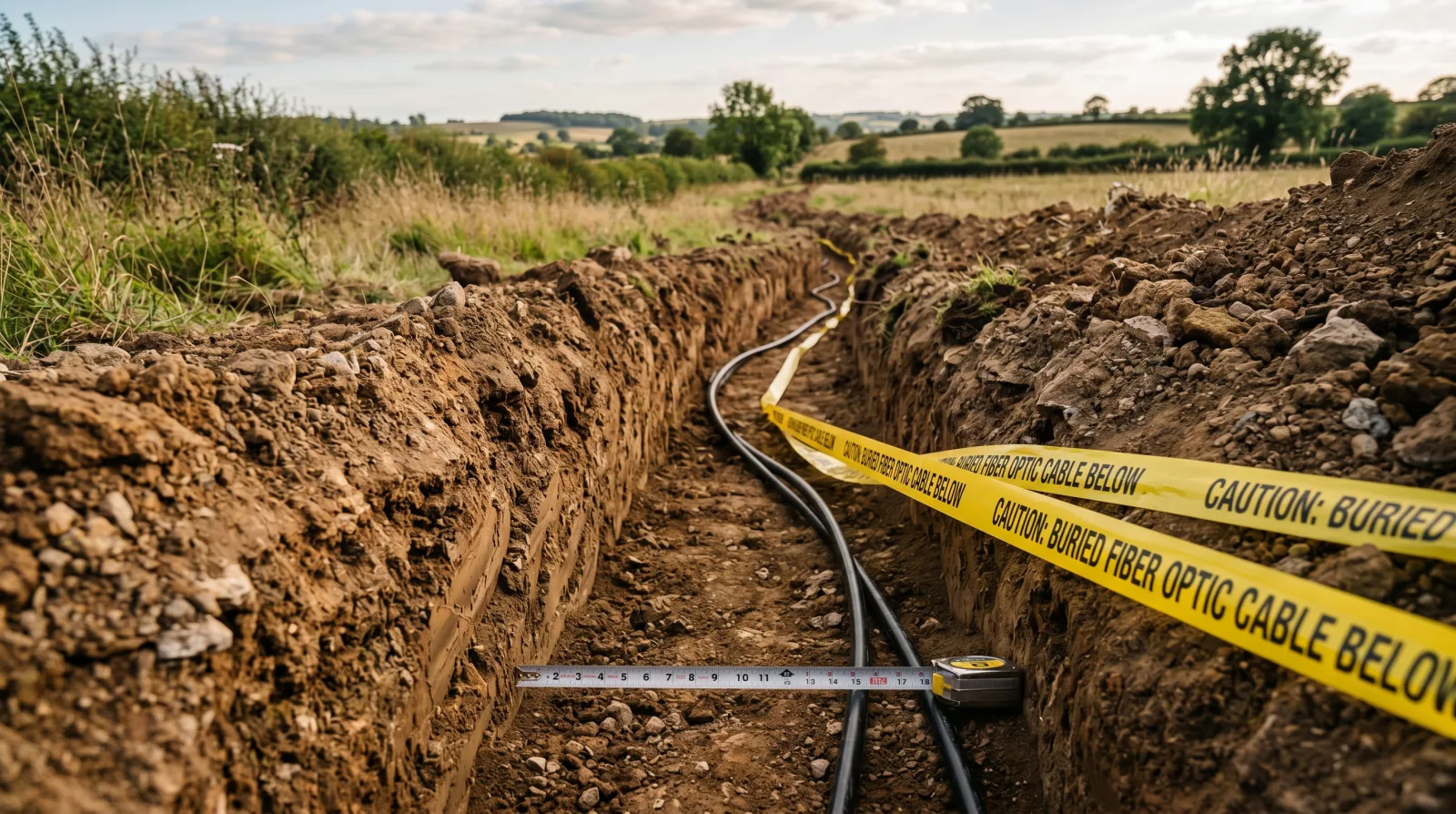
Its stiffness also helps maintain minimum bend radius during installation — preventing microbending loss before the cable even goes live. For practical trenching depths and cover requirements, see how deep should we bury fiber optic cable.
When Does MDPE Make More Sense — And What Are Its Advantages?
MDPE shines where flexibility, impact resistance, and ease of handling matter more than maximum rigidity.
Key strengths include:
- Better low-temperature toughness: Remains ductile down to -40°C, reducing brittleness in cold climates.
- Higher impact resistance: Absorbs shocks better during transport or accidental drops.
- Easier coiling and uncoiling: Less “spring-back” than HDPE, making it ideal for drop cables in FTTx networks, tactical or temporary field deployments, and cables requiring frequent repositioning.
In some regions, MDPE is also preferred for microduct or blown fiber applications, where the cable must navigate tight bends inside small-diameter conduits. Its slightly softer nature reduces friction and installation force.
How Do They Perform Against Environmental Stressors Like UV, Moisture, and Chemicals?
Both MDPE and HDPE are inherently resistant to water, acids, alkalis, and salts — making them ideal for outdoor use. However, raw polyethylene degrades under UV exposure, so carbon black (2–3%) is added to both for UV stabilization.
That said:
- HDPE offers slightly better long-term UV resistance due to its denser structure slowing oxidative degradation.
- MDPE may show earlier surface embrittlement in extreme desert environments — but this rarely affects bulk mechanical properties.
Neither absorbs meaningful moisture, so hydrogen generation or water-treeing isn’t a concern — unlike in some PVC or nylon jackets. This is why PE-based jackets dominate telecom standards like Telcordia GR-20 and IEC 60794.
What About Flame Resistance and Indoor Use?
Neither MDPE nor HDPE is flame-retardant. Both will burn and drip when exposed to open flame, releasing flammable hydrocarbons. Therefore, they are strictly prohibited inside buildings beyond the point of entrance (per NEC Article 770 and IEC 60332).
For indoor or riser applications, fiber cables use LSZH (Low Smoke Zero Halogen), PVC, or plenum-rated jackets instead. MDPE/HDPE cables must be terminated at an outdoor-rated enclosure or transitioned to indoor-rated cable before entering a structure.
This isn’t a flaw — it’s a design boundary. PE jackets excel outdoors; other materials take over indoors.
How Do Installation Practices Differ Between MDPE and HDPE Cables?
The material affects real-world handling:
HDPE cables:
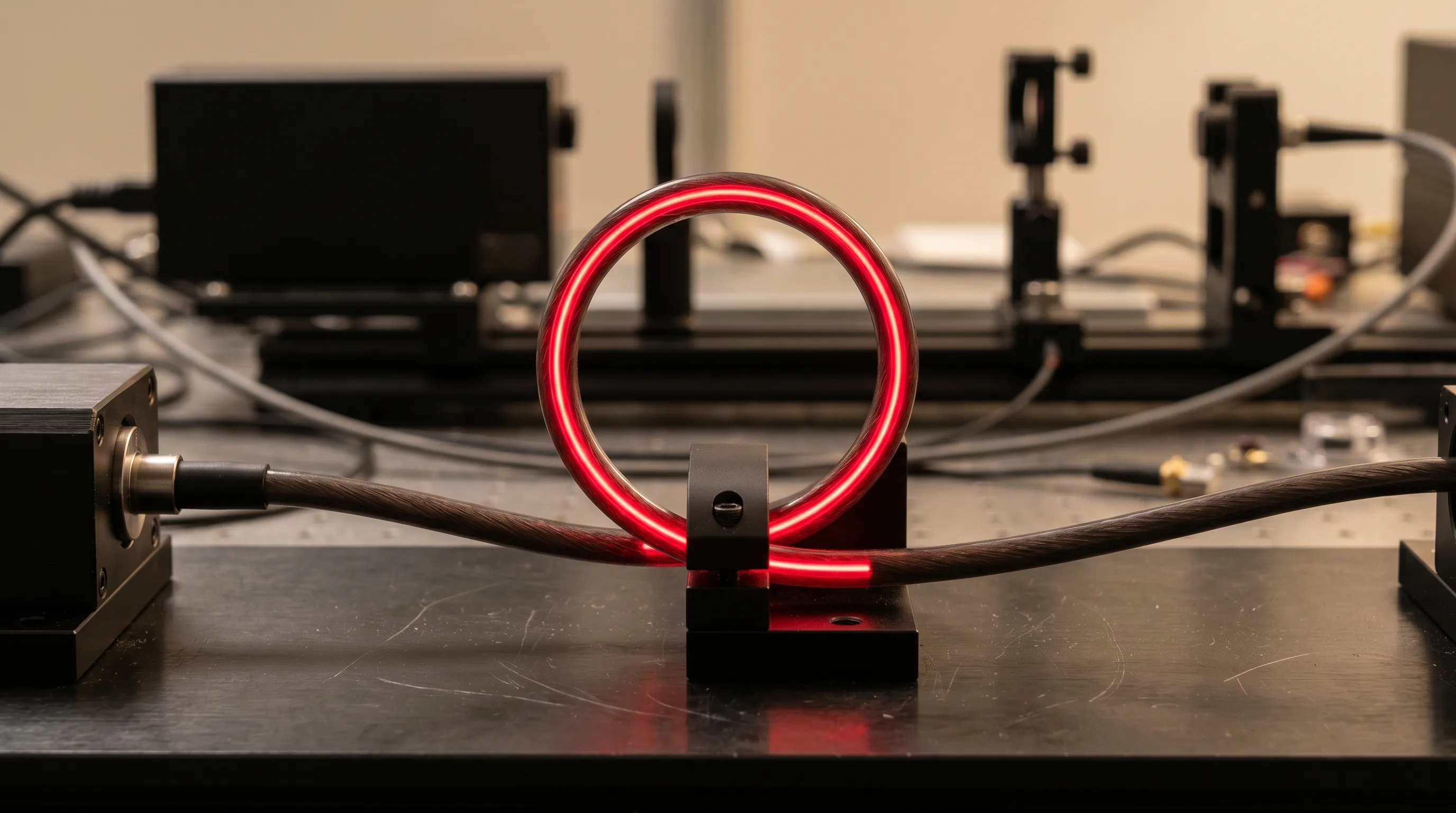
- Require larger bend radii (typically 20× cable diameter)
- Resist kinking but can “memory coil” if stored improperly
- Need careful pulling tension control to avoid jacket splitting
MDPE cables:
- Can tolerate tighter bends (15× diameter in some designs)
- Less prone to permanent set after coiling
- Easier to hand-pull in short drops or last-mile FTTx
In directional boring or plowing, HDPE’s stiffness helps the cable follow the bore path without buckling. In contrast, MDPE’s flexibility reduces the risk of damage when pulled around corners in congested ducts.
Do Standards Favor One Over the Other?
Not explicitly — but application dictates material.
- Telcordia GR-20 (North America) and IEC 60794 (global) specify performance requirements (tensile strength, crush resistance, temperature cycling) but don’t mandate MDPE or HDPE.
- ITU-T G.654.E (for submarine cables) often uses HDPE for its superior long-term hydrostatic stability.
- FTTx drop cable specs (e.g., ITU-T L.67) frequently allow MDPE for its flexibility and cold-weather performance.
In practice, cable manufacturers select the jacket based on intended use — not cost. A direct-buried backbone cable will almost always use HDPE; a flexible drop cable may choose MDPE. Browse TTI Fiber’s full outdoor fiber optic cable range to see how MDPE and HDPE jackets are matched to each deployment profile.
Is It Really About Choosing “Better” — Or Just “Right”?
HDPE isn’t “better” than MDPE — they’re optimized for different missions.
HDPE is the steadfast guardian: rigid, resilient, built to endure decades of silent service under soil and sky.
MDPE is the adaptable partner: supple, shock-absorbent, designed for the human scale of last-mile connections.
Choosing between them isn’t about specs alone — it’s about understanding the life your cable will live. Will it lie motionless under a highway for 30 years? HDPE. Will it be coiled, uncoiled, and routed into homes by technicians in winter? MDPE.
In fiber optics, the best jacket isn’t the strongest or the softest.
It’s the one that disappears — doing its job so well, you never think about it again.
And that’s the quiet art of material selection. For a deeper look at the ultra-pure glass these jackets protect, continue with raw materials of high-quality optical fiber glass.