What is GYFTY Fiber Cable?
What is GYFTY Fiber Cable?
GYFTY Fiber Cable is a type of outdoor fiber optic cable primarily used in aerial installations and environments where metallic components are not allowed due to electromagnetic interference (EMI) concerns. GYFTY cables are non-metallic and are ideal for long-distance communication, outdoor data transmission, and environments that require high performance and durability in harsh conditions. For a broader primer on how stranded loose-tube construction compares with tight-buffered designs, see our article on differences between tight-buffered and loose-tube fiber optic cables.
Construction and Material Introduction of GYFTY Fiber Cables
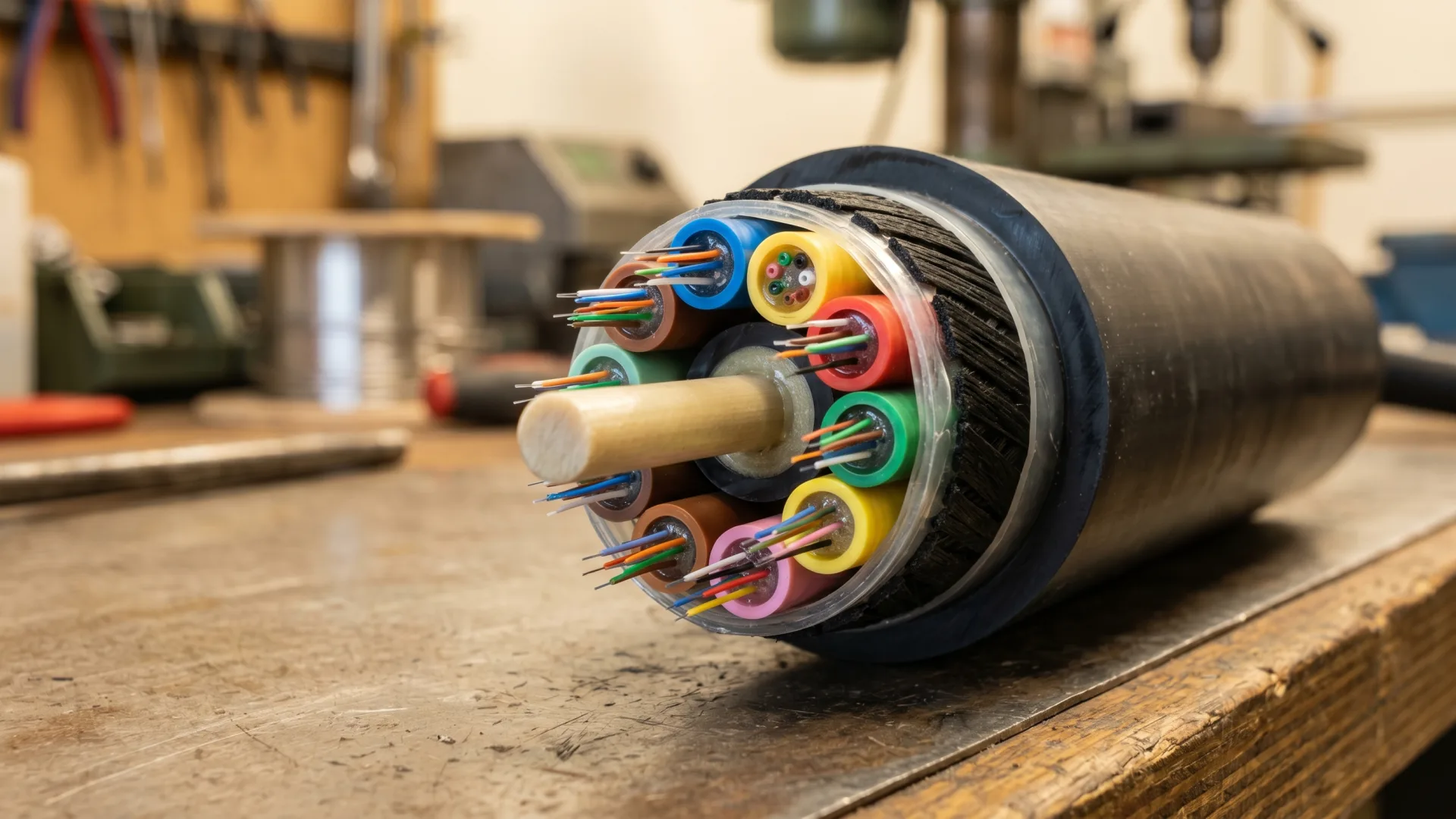
1. Central Strength Member (FRP — Fiberglass Reinforced Plastic):
The core of GYFTY fiber cables consists of a non-metallic central strength member made of fiberglass-reinforced plastic (FRP). This component provides the necessary tensile strength and helps maintain the cable's shape while protecting it from physical stress during installation and operation.
The non-metallic nature of the FRP ensures that the cable remains immune to electromagnetic interference (EMI), making it suitable for aerial installations near power lines and other electrical infrastructures.
2. Loose Tube with Optical Fibers:
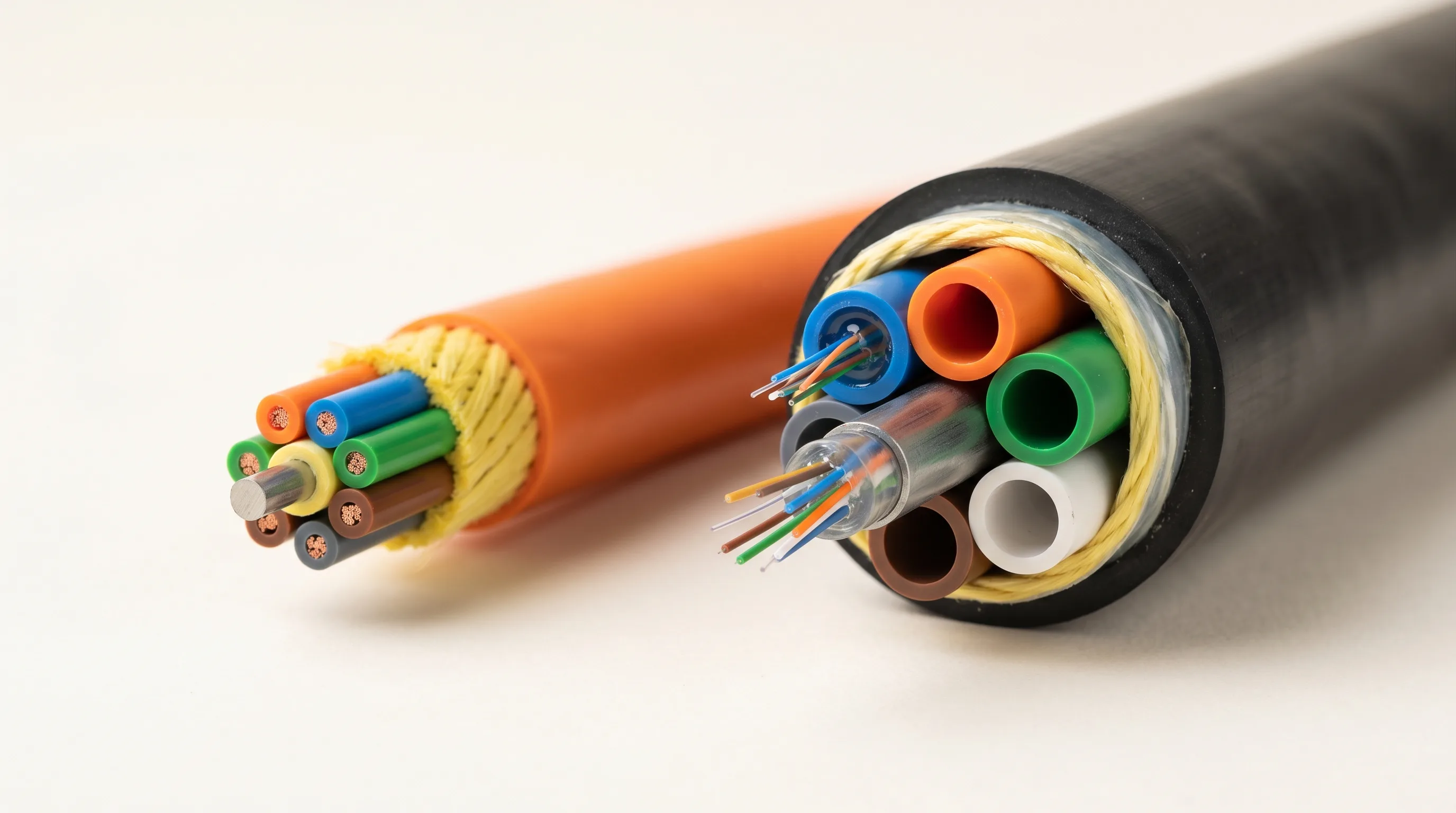
Surrounding the central FRP core are loose tubes that contain the optical fibers. These tubes are made of high-modulus materials, which are both flexible and strong. Inside the loose tubes, the optical fibers are protected with water-blocking gel or a similar compound that shields them from moisture and external environmental factors.
The loose tube design allows for some fiber movement, preventing stress on the fibers during cable bending or when exposed to temperature changes.
3. Water-Blocking Gel:
The loose tubes are filled with water-blocking gel that provides moisture resistance and prevents water from infiltrating the cable. This is essential for outdoor installations, ensuring long-term protection against humidity, rain, and other environmental conditions.
The gel also provides a buffering effect to further protect the optical fibers from mechanical stress and vibrations.
4. Cable Core and Fillers:
The cable core is built with stranded loose tubes (and sometimes filler rods in empty spaces), which are twisted around the central strength member. This stranded configuration helps distribute mechanical stress and ensures the cable's durability.
Any gaps within the cable core are filled with a water-blocking material to provide additional protection against moisture infiltration.
5. Outer Sheath (Polyethylene — PE):
The outer layer of GYFTY fiber cables is a polyethylene (PE) sheath. This material is chosen for its excellent UV resistance, ensuring the cable can withstand prolonged exposure to sunlight without degradation. The PE sheath also provides protection against chemical exposure, abrasion, and environmental hazards.
The sheath's lightweight and flexible nature allows for easy installation, particularly in aerial deployments.
Key Materials Used in GYFTY Fiber Cables
- Fiberglass-Reinforced Plastic (FRP): Provides strength and non-metallic construction, crucial for environments with electromagnetic interference.
- High-Modulus Loose Tube Material: Protects optical fibers and allows flexibility.
- Water-Blocking Gel: Protects the optical fibers from moisture and environmental damage.
- Polyethylene (PE) Sheath: Ensures UV resistance and environmental protection.
Key Features of GYFTY Fiber Cable
- Non-Metallic Construction: The "GYFTY" in the name refers to the composition and design of the cable. It uses glass fiber reinforced plastic (FRP) as the central strength member, making the cable completely non-metallic. This prevents any risk of EMI or lightning issues, which is crucial in high-voltage areas or near power lines.
- Loose Tube Design: The optical fibers are housed in loose tubes filled with a water-blocking gel that protects the fibers from moisture and environmental factors, enhancing the cable's durability in outdoor conditions.
- Waterproofing: GYFTY cables have water-blocking materials throughout their structure, ensuring moisture does not penetrate the cable, which is essential for outdoor installations.
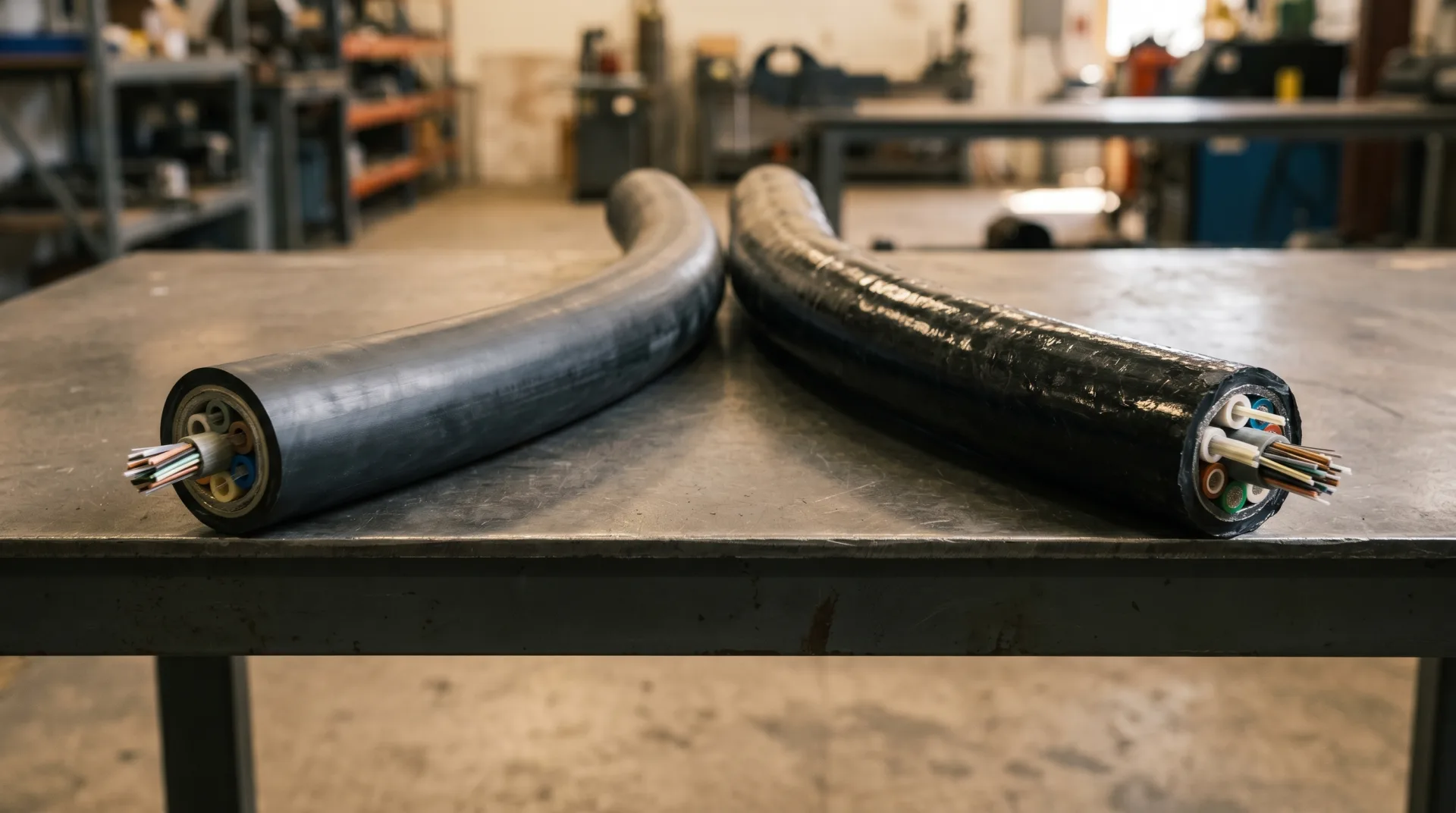
- Lightweight and Flexible: GYFTY cables are designed to be lightweight, making them easier to install in aerial setups. They are also flexible, allowing for ease of installation even in challenging outdoor terrains.
- PE Sheath: The cable has a polyethylene (PE) outer sheath, which provides protection against UV radiation and environmental exposure, making it suitable for outdoor applications where long-term exposure to sunlight and weather is a factor.
GYFTY Fiber Cable Common Applications
1. Aerial Installations
Power Lines: GYFTY cables are frequently installed along power lines, especially in high-voltage areas where metallic cables could be affected by electromagnetic interference (EMI) or lightning. Their non-metallic design ensures they do not conduct electricity or interfere with nearby power transmission. For a comparison with metallic ground-wire fiber carriers, see the difference between OPGW and traditional wires.
Telecommunications Towers: These cables are often used in aerial infrastructure to connect telecommunications towers, delivering reliable data transmission over long distances.
2. Outdoor Backbone Networks
Long-Distance Communication: GYFTY cables are ideal for forming the backbone of long-distance fiber optic networks. Their strong environmental resistance, combined with excellent mechanical strength, allows them to transmit data across large geographic areas, often in remote or rural regions.
Inter-City Fiber Networks: These cables can span between cities, providing high-speed, uninterrupted communication for telecommunications companies and internet service providers (ISPs).
3. Rural and Harsh Environmental Areas
Rural Telecommunications: In regions where burying cables is not feasible due to cost or terrain, GYFTY fiber cables are used for aerial installations, ensuring that rural communities have access to reliable communication networks.
High Temperature and Humidity Zones: GYFTY cables are designed to withstand extreme weather conditions, making them a popular choice in environments that experience high heat, humidity, and UV radiation.
4. Railway and Highway Communication Systems
Rail Networks: GYFTY cables are used along railways to support communication systems between stations or control centers, as their non-metallic structure prevents any interference from high-voltage railway power systems.
Highway Monitoring Systems: These cables are often deployed along highways to connect surveillance systems, emergency communication points, and traffic monitoring devices.
5. Industrial Environments
Factories and Plants: In industrial settings where electrical interference is common, GYFTY cables are used for data transmission, ensuring reliable communication without the risk of EMI.
Oil and Gas Fields: The non-metallic design makes them a safe choice for areas like oil fields or gas plants, where sparks from metal components could be hazardous.
6. Urban Infrastructure Networks
Smart City Solutions: GYFTY cables are employed in urban areas to support smart city initiatives, such as traffic monitoring, surveillance systems, and public Wi-Fi networks, where high-speed, reliable data transmission is essential. To specify the right GYFTY build for your route, browse TTI Fiber's outdoor fiber optic cable family.
What are the Advantages of GYFTY Fiber Cable?
- Non-Metallic Design: The GYFTY cable is completely non-metallic, using fiberglass-reinforced plastic (FRP) as the central strength member. This makes it resistant to electromagnetic interference (EMI), lightning, and electrical hazards, making it ideal for installations near power lines or high-voltage environments.
- Lightweight and Flexible: GYFTY cables are lightweight and have a small diameter, making them easy to handle and install, especially in aerial applications. The flexibility of the cable allows for quick and efficient deployment, reducing installation time and costs.
- Waterproofing and Moisture Resistance: The loose tube structure is filled with water-blocking gel, which prevents moisture from penetrating the cable. This makes GYFTY fiber cables highly durable in outdoor and humid environments, ensuring reliable performance in harsh weather conditions.
- UV and Environmental Protection: The polyethylene (PE) outer sheath provides excellent protection against UV radiation, extreme temperatures, and environmental factors. This makes the cable suitable for long-term outdoor installations where exposure to the elements is a concern.
- Good Mechanical Performance: GYFTY cables exhibit excellent mechanical strength, including high tensile strength and crush resistance, ensuring durability during installation and throughout their service life. This is especially useful in installations where the cable might be subjected to physical stress.
- Low Attenuation: The fiber optics within the GYFTY cable ensure low signal loss (attenuation) over long distances, providing high-speed, reliable data transmission for telecommunications and network systems. This is crucial for long-distance communication and backbone networks.
- Corrosion Resistance: Since GYFTY cables are non-metallic, they are naturally resistant to corrosion. This is particularly important in environments exposed to chemicals, saltwater, or industrial pollutants.
- Cost-Effective Installation: Due to its lightweight and non-metallic construction, GYFTY cable is easier and more cost-effective to install compared to heavier, metallic cables. This reduces transportation costs and simplifies the logistics of installation, especially in aerial applications.
- Long Delivery Lengths: GYFTY cables can be manufactured in long continuous lengths, reducing the number of splices required during installation. Fewer splices mean lower installation costs and improved transmission quality over long distances.
- Compliance with International Standards: GYFTY cables adhere to key international standards like IEC 60794-1 and YD/T 901-2009, ensuring that they meet strict quality and performance requirements, which is essential for both commercial and industrial applications.
What are the Limitations of GYFTY Fiber Cable?
While GYFTY fiber cables offer several advantages, they also have limitations that need to be considered depending on the application:
- Not Suitable for Direct Buried Installations: GYFTY cables lack metallic armor, which makes them vulnerable to external physical damage such as crushing, impact, or rodents. For this reason, they are typically not suited for direct underground burial without additional protection, such as conduit or protective piping. For burial depth and protection guidance on armored outdoor cables, see how deep should we bury fiber optic cable.
- Limited to Non-Electrically Active Areas: Although the non-metallic construction is an advantage in environments where electromagnetic interference (EMI) is a concern, it is a limitation in situations where electrical grounding is required. Other types of armored fiber cables with metallic components might be needed for grounding or additional tensile strength in certain applications.
- Lower Tensile Strength Compared to Armored Cables: While GYFTY cables do provide some tensile strength due to the fiberglass-reinforced plastic (FRP) central member, they generally have lower tensile strength compared to armored or steel-reinforced cables. This can make them less suitable for installations requiring high mechanical stress resistance, such as underwater or heavy-duty environments.
- Susceptible to Rodent Damage: The non-metallic structure of GYFTY cables makes them more vulnerable to rodent attacks compared to cables with metallic armor. In areas prone to such damage, additional protective measures (such as rodent-resistant conduits) may be necessary.
- Limited Crush Resistance: Since GYFTY cables lack the metallic armor layer that other outdoor cables may have, they are more prone to being crushed or damaged under heavy loads or impacts, particularly in industrial or construction environments where mechanical stress is frequent.
- Not Ideal for High-Traffic Areas: Due to the cable's relative vulnerability to external pressures and impacts, GYFTY cables are less suitable for high-traffic areas (such as along roadways or construction zones) unless they are placed in protective conduit systems.
- UV Resistance May Degrade Over Time: Although the polyethylene (PE) outer sheath offers UV protection, continuous exposure to harsh sunlight over many years can lead to degradation of the sheath, potentially reducing the cable's durability and lifespan in some extreme outdoor environments.
- Limited Armor for Harsh Environments: GYFTY cables lack the steel armoring found in some other fiber cables, which means they are not as resistant to very harsh environments, such as those involving heavy machinery, rocky terrain, or abrasive conditions. In such cases, armored fiber optic cables might be more appropriate.
- Temperature Sensitivity: While GYFTY cables are designed for outdoor use, extreme temperature fluctuations over long periods can still affect the cable's outer sheath and performance. In environments with severe temperature variations, specific temperature-rated cables might perform better.
- Higher Installation Costs in Some Cases: Although the cable itself is lightweight and cost-effective in aerial installations, the need for additional protective measures (such as conduits, underground piping, or supports) in certain environments can increase the overall installation cost.