What Influences Fiber-Optic Speed? A Buyer's Guide to Cable Build Quality
How Design, Construction, and Materials Influence Fiber-Optic Speed
Fiber-optic internet is often praised as the fastest, most future-proof method of connectivity. But many consumers still wonder — why is one fiber connection faster than another? And what role does the design, construction, and raw materials of fiber cable play in its performance?
If you're installing fiber in your home, running high-speed connections in a small office, or buying fiber patch cords for a media setup, this guide will help you understand how the physical makeup of fiber affects speed and reliability.
Let's explore the 12 most important factors that influence fiber-optic speed — from core size to jacket material, and everything in between. If you're a network engineer looking for the deeper technical treatment (SMF vs MMF physics, attenuation budgets, GPON vs Active Ethernet, DWDM, transceiver modulation, protocol overhead), read our sibling technical deep-dive on the 11 critical factors that influence fiber-optic internet speed.
Why Fiber-Optic Speed Isn't Just About Your Internet Plan
Most people assume that a faster internet plan equals faster speeds. While that's partly true, it overlooks a critical point: your fiber cable and components act like a highway — and narrow, poorly constructed roads can't handle fast cars.
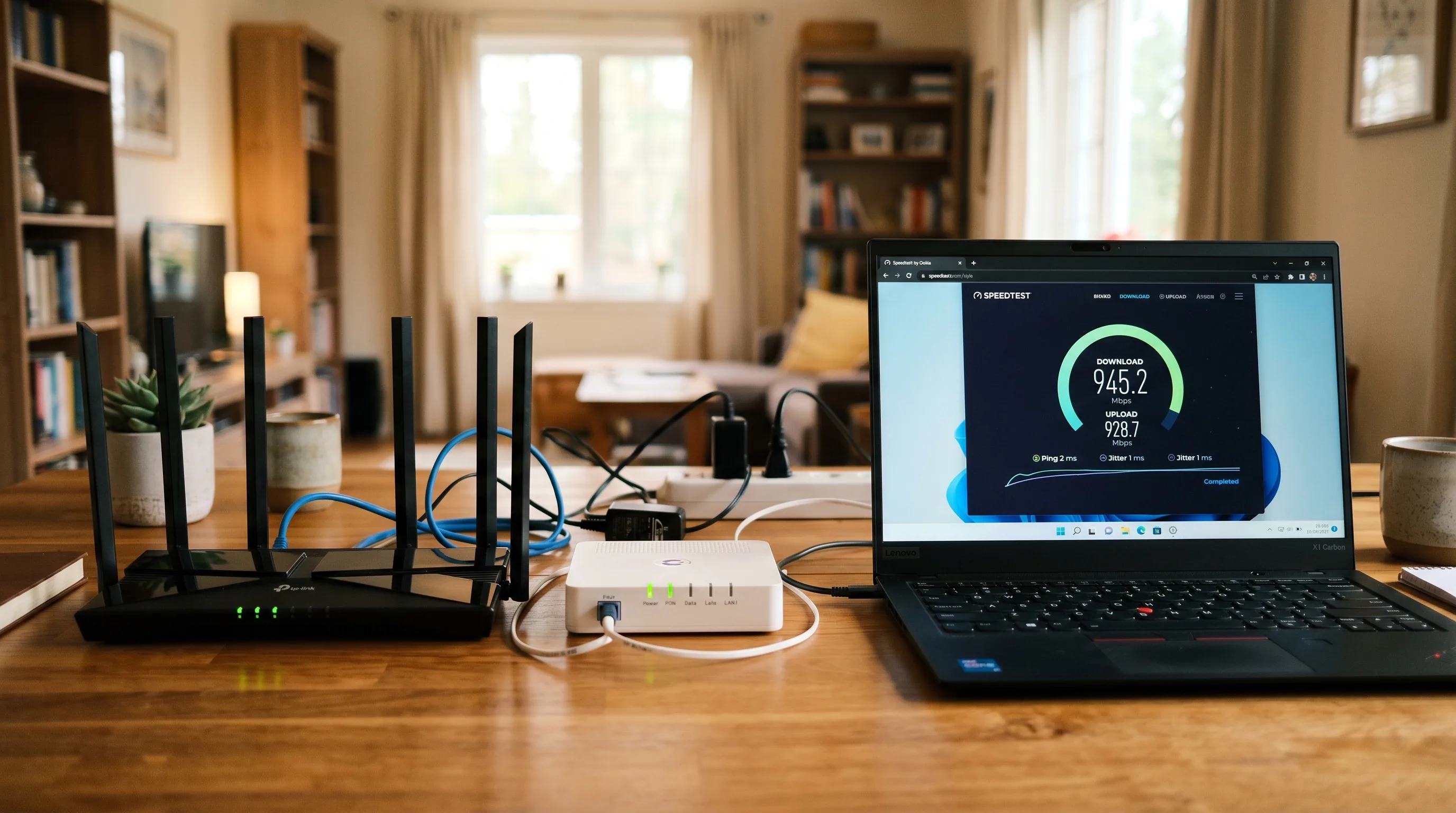
Even with a gigabit service, you won't experience full speed if the fiber cable, connectors, or transceivers can't support it. Speed begins at the physical layer — which is where cable design matters most. If you're still deciding which plan to buy in the first place, see the best fiber-optic speed for your home or office in 2025 for tier-by-tier recommendations.
How the Core Design of Fiber Cable Affects Speed
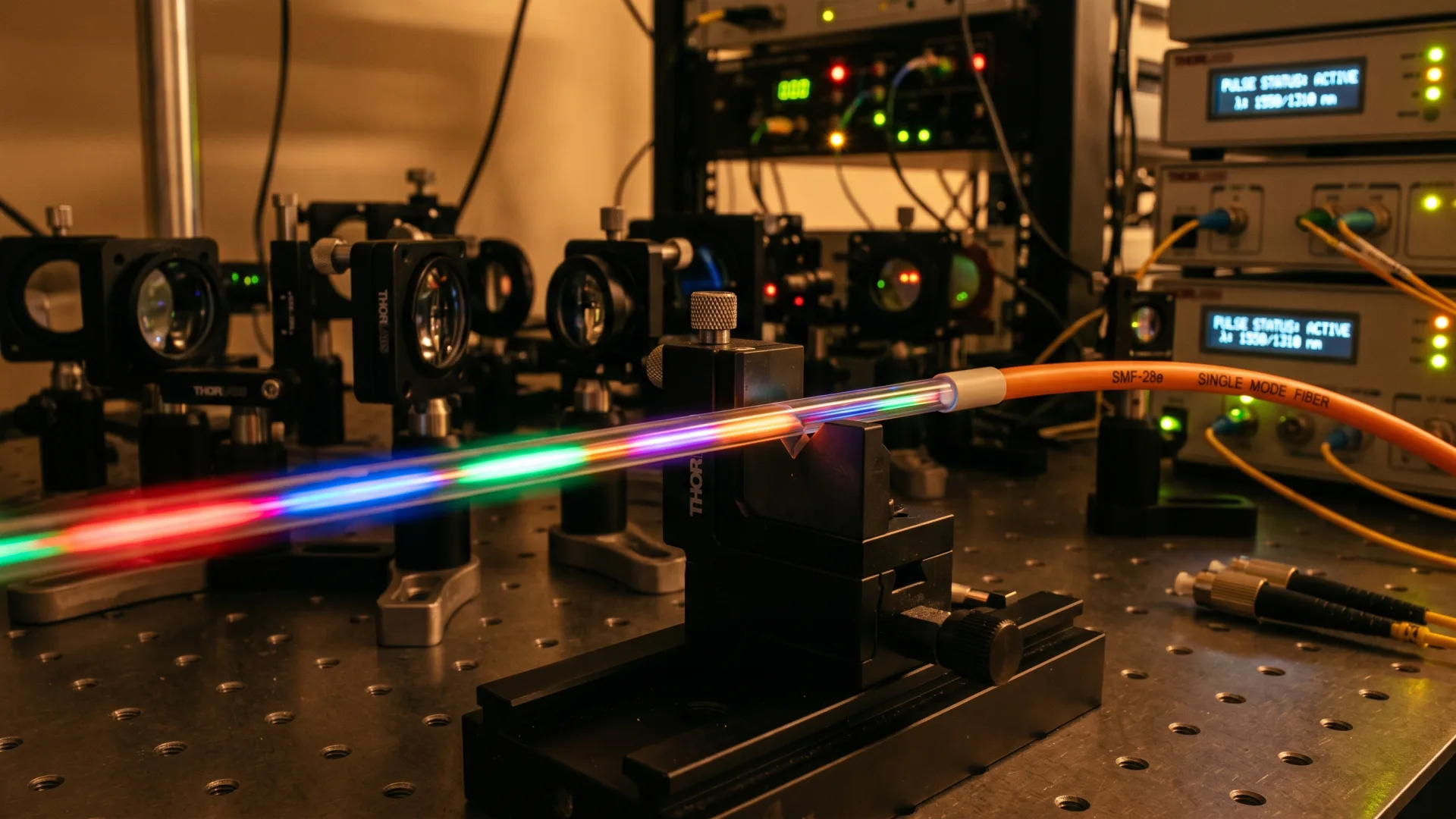
At the heart of every fiber cable is the core, the ultra-fine glass center that carries light signals. Core size and geometry directly influence how quickly and how far data can travel.
- Single-mode fiber (SMF) has a 9-micron core and transmits one light signal at a time — perfect for long distances and high speeds.
- Multimode fiber (MMF) has a 50 or 62.5-micron core and carries multiple light modes, which can lead to signal distortion over distance.
Key Point: The narrower the core (as in SMF), the more precise the light path — leading to higher speeds over longer distances.
Cladding & Coating Layers: The Silent Speed Enablers
Surrounding the core is the cladding, typically 125 microns thick, made from a slightly different type of glass that reflects light inward. This keeps the signal tight and on track.
- Poor quality cladding can allow signal leakage, increasing attenuation (loss of signal strength).
- The coating adds mechanical strength, protecting against microbends that also degrade speed.
Even though they're not the most visible parts of the cable, cladding and coating quality have a major effect on maintaining speed and signal clarity.
Jacket Material Matters: Protection Without Performance Loss
Fiber-optic cables come with different jacket types depending on their installation environment. While jackets don't directly carry the signal, they play a role in preserving cable integrity.
- PVC Jackets are common indoors but don't resist fire well.
- LSZH (Low Smoke Zero Halogen) jackets reduce toxic emissions — important for enclosed public spaces.
- TPU or PE Jackets used in outdoor cables provide UV, water, and crush resistance.
Why it matters: A fiber cable exposed to moisture or UV light can degrade, impacting internal layers and leading to speed-reducing damage. For a deeper look at environmental and Wi-Fi culprits that can masquerade as fiber speed issues, see what can interfere with fiber optic internet.
Single-Mode vs. Multimode: A Design Difference That Impacts Speed
The choice between single-mode and multimode fiber often comes down to two factors: distance and speed.
| Type | Core Size | Max Speed | Max Distance | Best For |
|---|---|---|---|---|
| Single-mode | 9 µm | 100 Gbps+ | >10 km | Long-distance, backhaul |
| Multimode OM3 | 50 µm | 10 Gbps | ~300 m | LAN, short distances |
| Multimode OM4 | 50 µm | 40–100 Gbps | ~400–550 m | Data centers |
Summary: If you're running high-speed fiber between rooms or floors, OM4 multimode may be sufficient. For outdoor or long-haul use, single-mode is required to preserve full speed.
OM1 to OM5: What Cable Grades Really Mean for Your Bandwidth
Multimode fiber cables are classified from OM1 to OM5 — and each type supports different speed/distance combinations due to how the core is designed and the grade of glass used.
| Grade | Speed Support | Max Length @ 10G | Color |
|---|---|---|---|
| OM1 | 1G | 33 m | Orange |
| OM2 | 1G–10G | 82 m | Orange |
| OM3 | Up to 40G | 300 m | Aqua |
| OM4 | Up to 100G | 400–550 m | Aqua |
| OM5 | WDM-compatible 100G+ | 550 m+ | Lime Green |
If you're buying patch cables, choosing the right OM rating ensures you don't unintentionally limit your network speed.
How Fiber Connector Quality Impacts Speed and Signal Integrity
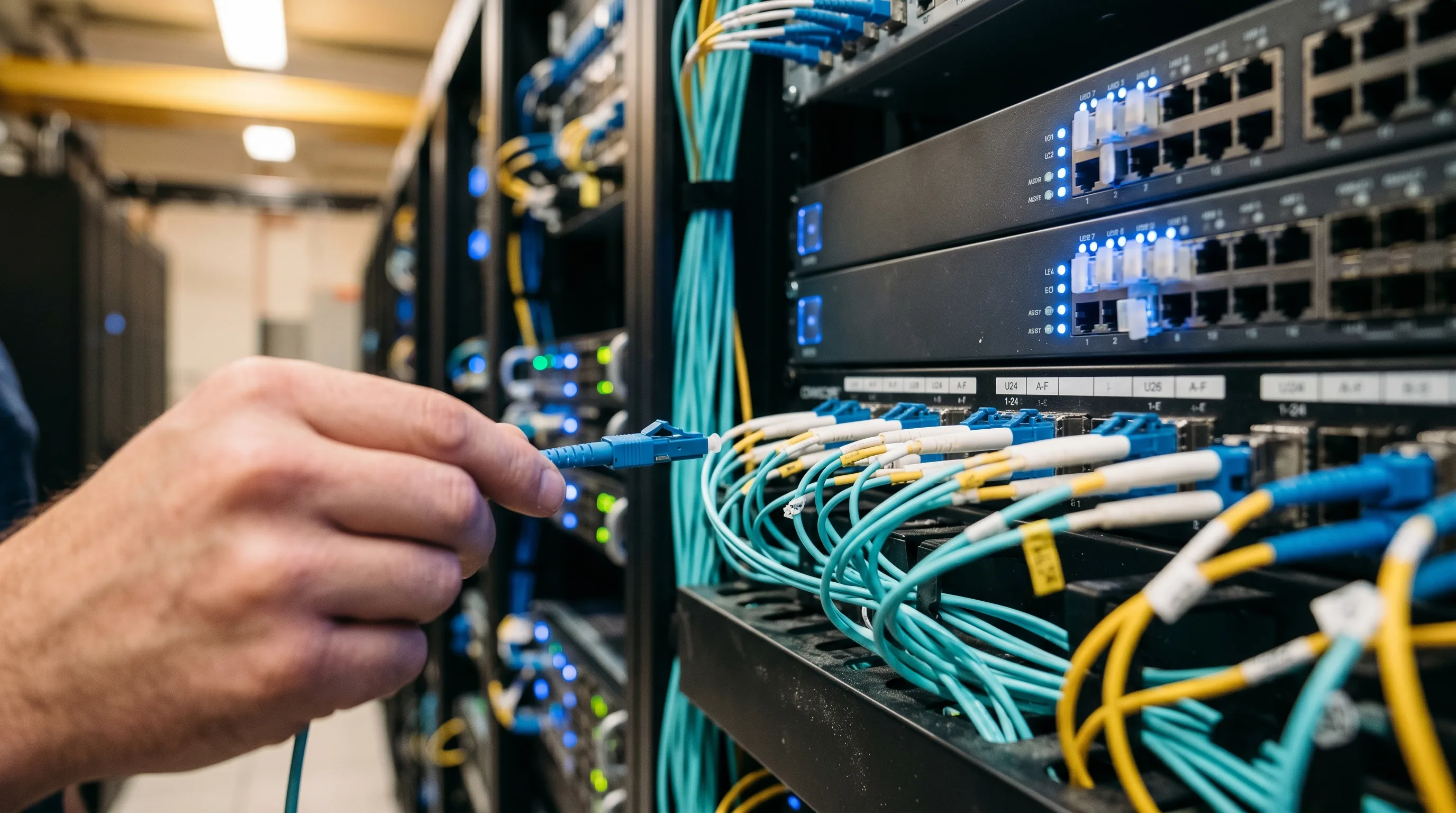
Fiber connectors (LC, SC, ST, etc.) may look alike, but they differ in quality and polish. A poorly polished connector can reflect light back into the fiber, causing signal loss and speed degradation.
- UPC connectors are polished flat and offer low return loss.
- APC connectors are polished at an angle and provide even better return loss, which is important for high-speed networks.
Rule of thumb: For high-bandwidth connections (10G, 40G, 100G), APC connectors help ensure full throughput. TTI Fiber's fiber optic patch cord range ships in both UPC and APC polishes with 100 % inspected end-faces, so you get the low insertion loss and high return loss your speed tier deserves.
Fusion Splicing vs. Mechanical Splicing: What's Better for Performance?
When extending or repairing fiber, splicing is necessary. But not all splices are equal.
- Fusion Splicing: Uses heat to fuse two fibers. Results in low insertion loss (<0.1 dB) and consistent performance.
- Mechanical Splicing: Uses mechanical alignment and index-matching gel. Can lead to higher loss (~0.3 dB) and instability.
Key Takeaway: For applications where speed and precision matter, fusion splicing is preferred to preserve data integrity.
Why Raw Glass Quality Directly Affects Your Data Rate
The heart of every fiber cable is ultra-pure silica glass. High-quality glass ensures:
- Lower attenuation (signal loss)
- Reduced scattering
- Improved bend performance
Premium-grade fiber uses raw materials refined to sub-ppm levels of metallic and hydroxyl impurities. If you're sourcing fiber cable for performance, ask about the origin and purity of the raw materials.
The Role of Precision in Manufacturing: Microns Make a Difference
Manufacturing tolerances — even at the micron level — affect how light travels through fiber.
- Variations in core concentricity and cladding geometry can cause modal distortion.
- Cheap cables often have inconsistent buffer diameters, leading to improper fits and microbends during installation.
Brands like TTI Fiber are known for their high-precision fiber manufacturing, offering consistent geometry and core alignment for optimized signal delivery.
Premium vs. Cheap Fiber: Is There a Real Speed Difference?
Absolutely. While all fiber cables may appear similar, budget cables often:
- Use recycled or inconsistent jacket materials
- Cut corners in coating thickness or glass quality
- Fail to meet strict IEC or TIA standards
This can result in higher attenuation, reduced speed, and a shorter service life. If you're running a network that depends on speed (like gaming, video conferencing, or cloud sync), don't risk it with cheap fiber.
What to Look for When Buying Fiber Products for Speed
If speed is your goal, here's a checklist to guide your purchasing decisions:
- Choose OM4 or OM5 for multimode speed
- Use Single-mode OS2 for long-distance high-speed runs
- Look for LSZH jackets for safe indoor installs
- Select APC connectors for high-speed signal return loss
- Prefer fusion-spliced assemblies for low-loss terminations
- Stick with trusted brands like TTI Fiber that meet international standards
The Hidden Speed Secrets Are in the Build
Your fiber-optic cable isn't just a wire — it's a carefully engineered, light-transmitting system made of microscopic layers that all work together to deliver speed. By understanding how core design, material purity, coating, and even the polish of a connector impact signal quality, you can make smarter choices that protect your investment.
Whether you're buying a single patch cord or outfitting an entire smart home, keep this principle in mind: speed isn't only about bandwidth — it's about build quality. Browse TTI Fiber's fiber optic patch cord catalog or talk to our team when you're ready to spec a build that lives up to the speed on your service plan.