The Evolution of Low Loss Optical Fiber: A Game-Changer in Communication
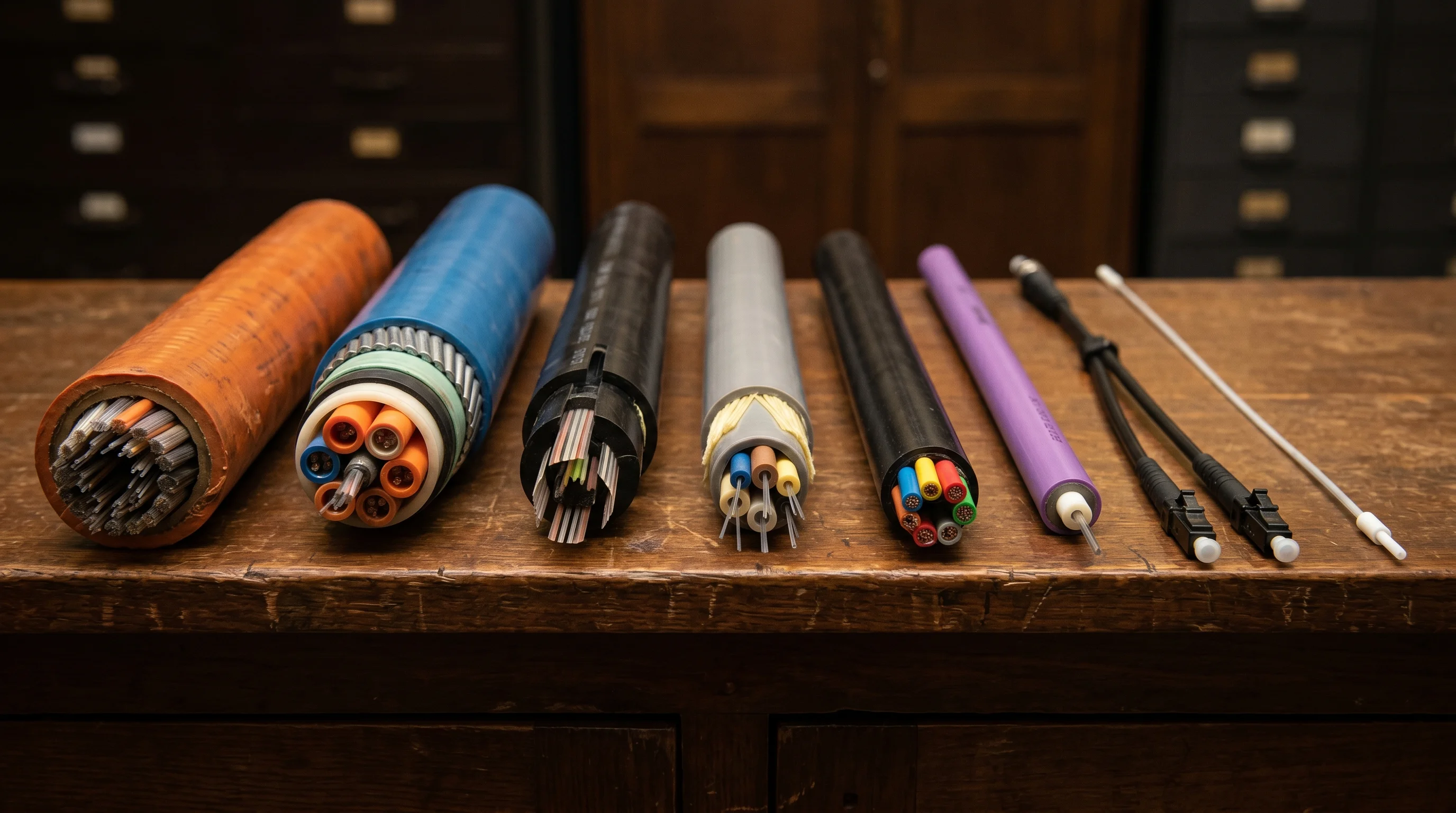
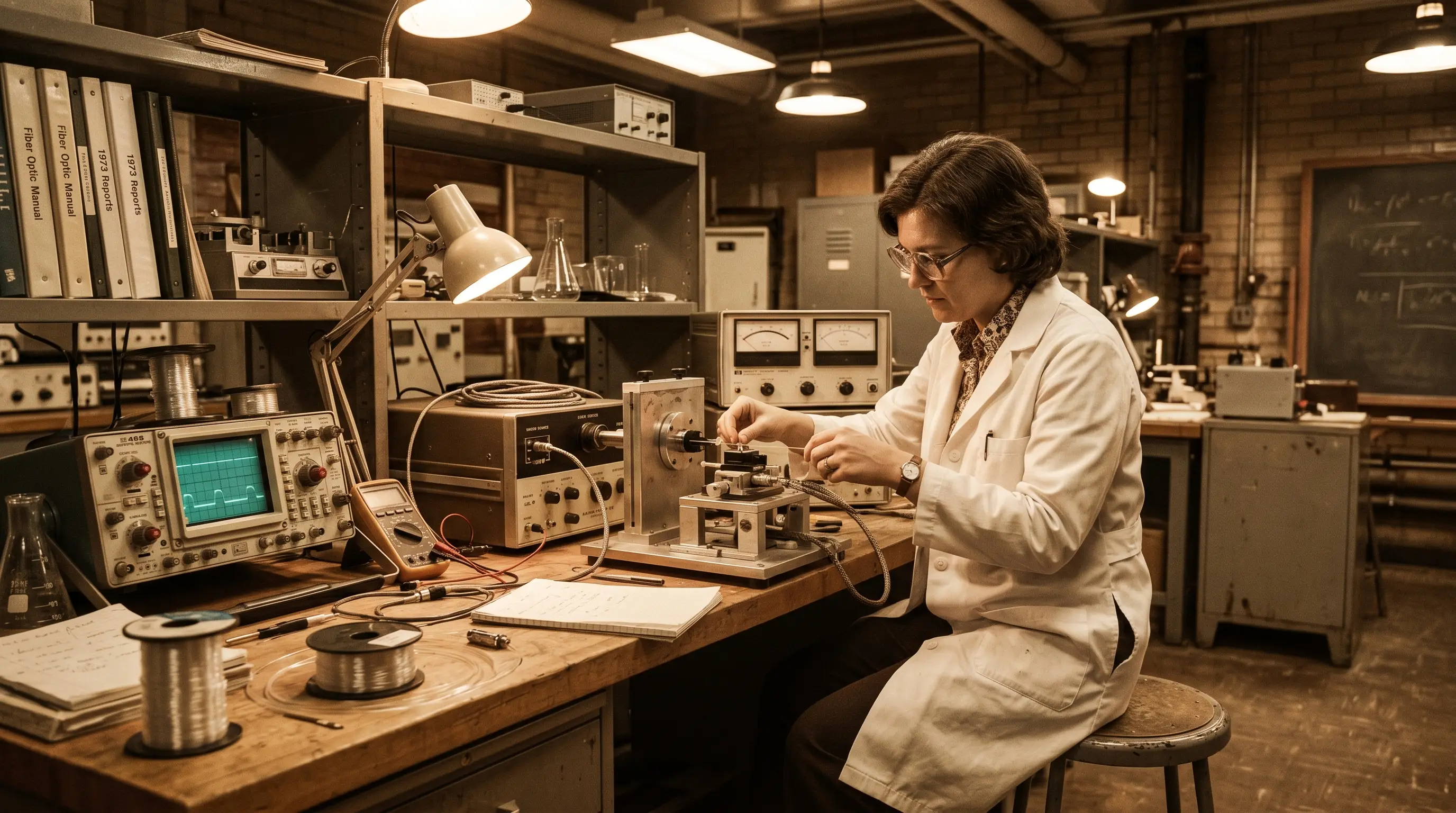
Low loss optical fiber has played a crucial role in revolutionizing telecommunications, enabling faster and more reliable data transmission over long distances. From early experiments with light transmission to the modern ultra-low loss fibers used in high-speed networks, the journey of optical fiber technology has been marked by significant scientific breakthroughs. Let's dive into its fascinating history. For a broader timeline of the cable itself, see the brief history of fiber optic cable.
The Early Days of Light Transmission (19th to Mid-20th Century)
Long before optical fiber became a reality, scientists were experimenting with ways to guide light efficiently. The earliest known concepts that contributed to fiber optics include:
- 1841 – Light Guiding in Water: Swiss physicist Daniel Colladon and French scientist Jacques Babinet demonstrated how light could travel through a stream of water, laying the foundation for light guidance.
- 1870 – Total Internal Reflection: Irish physicist John Tyndall formally explained the principle of total internal reflection (TIR), proving that light could be trapped and guided inside a medium.
- 1930s-1950s – Fiber Bundles for Imaging: Researchers started using fiber bundles to transmit images, particularly for medical endoscopes. However, these early fibers suffered from extremely high signal loss—over 1,000 dB/km, making them impractical for long-distance communication.
At this stage, optical fiber was still far from being a viable alternative to copper wires for telecommunications.
1966 Charles Kao's Groundbreaking Discovery on Fiber Loss
The biggest turning point in optical fiber history came in 1966, when Dr. Charles Kao and George Hockham at Standard Telecommunication Laboratories (STL) made a groundbreaking discovery. They proposed that:
- The high signal loss in early optical fibers was due to impurities in the glass, rather than a fundamental limitation of the technology.
- If optical fibers were made from high-purity silica, losses could be reduced below 20 dB/km, making them suitable for long-distance communication.
This was a revolutionary idea. Prior to Kao's research, many believed that optical fiber could never compete with traditional copper cables. His work earned him the 2009 Nobel Prize in Physics and cemented his reputation as the "Father of Fiber Optics." For a deeper look at the glass chemistry Kao pointed to, see our guide on the raw materials of high-quality optical fiber glass.
1970 Corning Produces the First Low Loss Optical Fiber
Inspired by Charles Kao's research, Corning Glass Works (USA) made a breakthrough in 1970 when scientists Robert Maurer, Donald Keck, and Peter Schultz successfully created the first practical low loss optical fiber.
- Attenuation was reduced to 17 dB/km—a dramatic improvement over previous fibers.
- The secret? Ultra-pure fused silica glass, which minimized light absorption and scattering.
This development opened the door for commercial fiber optic communication, but more improvements were still needed. For a modern view of how that same preform-to-fiber journey works today, read low-loss optical fiber from raw materials to final product.
The Rapid Evolution of Low Loss Optical Fiber (1970s–Present)
1970s – Early Commercial Deployments
- 1972: Corning refined its fiber manufacturing process, lowering loss to 4 dB/km.
- 1977: The first commercial fiber optic telephone system was installed in Chicago, proving that fiber optics could outperform copper cables.
1980s – Scaling Up Fiber Optic Networks
- Loss reduced to 0.5 dB/km, enabling long-distance communication without frequent signal regeneration.
- The first transatlantic fiber optic cable (TAT-8) was laid in 1988, connecting the U.S., U.K., and France.
1990s – Ultra-Low Loss and Fiber Amplification
- The introduction of Erbium-Doped Fiber Amplifiers (EDFAs) allowed signals to travel thousands of kilometers without needing electronic regeneration.
- Loss levels dropped further to 0.2 dB/km, approaching the theoretical limit of silica-based fibers.
2000s–Today – Cutting-Edge Fiber Technology
- Ultra-low loss fibers with attenuation as low as 0.16 dB/km became standard for submarine and long-haul networks.
- Optical fibers now support terabit-scale data transmission, powering the internet, cloud computing, and 5G networks.
Why Do Some Optical Fibers Have Lower Loss Than Others?
Several factors influence optical fiber loss, including:
- Purity of the Glass: The fewer impurities, the lower the light absorption.
- Wavelength of Light Used: Optical fibers are optimized for 1,310 nm and 1,550 nm wavelengths, where silica glass has minimal loss.
- Manufacturing Techniques: Advanced doping methods and improved fiber coatings help reduce scattering losses.
- Core Structure and Design: Modern low-loss fibers use graded-index or single-mode cores to maintain signal integrity over long distances.
Key Components and Raw Materials of Low Loss Optical Fiber
Low loss optical fibers are made using highly refined materials and advanced manufacturing techniques. The main components include:
- Core: The central glass or silica portion where light travels. Made of ultra-pure silica (SiO₂).
- Cladding: A surrounding layer that keeps light inside the core via total internal reflection. Made of slightly lower refractive index silica.
- Coating: A protective polymer layer that enhances mechanical strength and flexibility. Typically made from UV-cured acrylate or polyimide for harsh environments.
Common Issues with Low Loss Optical Fiber and How to Fix Them
Even with ultra-low loss fibers, problems can arise in real-world deployments. Here are some common issues and solutions:
- Signal Attenuation: Caused by bending, dirty connectors, or fiber splicing issues. Use proper cable management, clean connectors regularly, and ensure high-quality splices.
- Microbending and Macrobending Losses: Excessive bending can cause signal loss. Follow recommended bending radii and use flexible fiber coatings.
- Connector and Splice Losses: Poor splicing or misaligned connectors degrade performance. Use high-precision fusion splicing and properly align connectors.
Installation and Maintenance Tips for Low Loss Optical Fiber
Proper installation and maintenance are essential for ensuring optimal fiber performance.
Installation
- Use pre-terminated connectors when possible to reduce on-site splicing.
- Follow bend radius guidelines to prevent fiber stress.
- Protect fibers with outdoor-rated enclosures in harsh environments — our outdoor fiber optic cable range is built around the same low-loss silica cores described above.
Maintenance Tips
- Regularly inspect fiber connectors and splices for dust and dirt.
- Use an Optical Time-Domain Reflectometer (OTDR) to detect signal losses or faults.
- Ensure proper cable management to avoid unnecessary bending and pressure.
What's Next?
The demand for faster, more efficient fiber networks continues to grow. Some emerging advancements include:
- Hollow-Core Optical Fibers: A new type of fiber that uses air-filled cores, reducing signal loss even further.
- Quantum Communication Networks: Low-loss fibers are essential for transmitting quantum-encrypted data.
- Multi-Core and Space-Division Multiplexing (SDM): These innovations could increase fiber capacity while maintaining ultra-low loss.
From the pioneering research of Charles Kao to today's ultra-low loss optical fibers, the evolution of fiber optics has transformed global communication. The ability to transmit data over thousands of kilometers with minimal loss has made fiber optics the backbone of modern internet infrastructure.
With ongoing advancements, we can expect even lower loss, higher speeds, and more efficient fiber networks—paving the way for the next generation of ultra-fast, high-capacity data transmission.
At TTI Fiber, we combine technical expertise, continuous innovation, and customer-centric service to provide efficient and future-ready fiber communication solutions. Whether you're deploying telecom infrastructure or upgrading enterprise networks, TTI Fiber is your reliable partner in the world of optical connectivity.