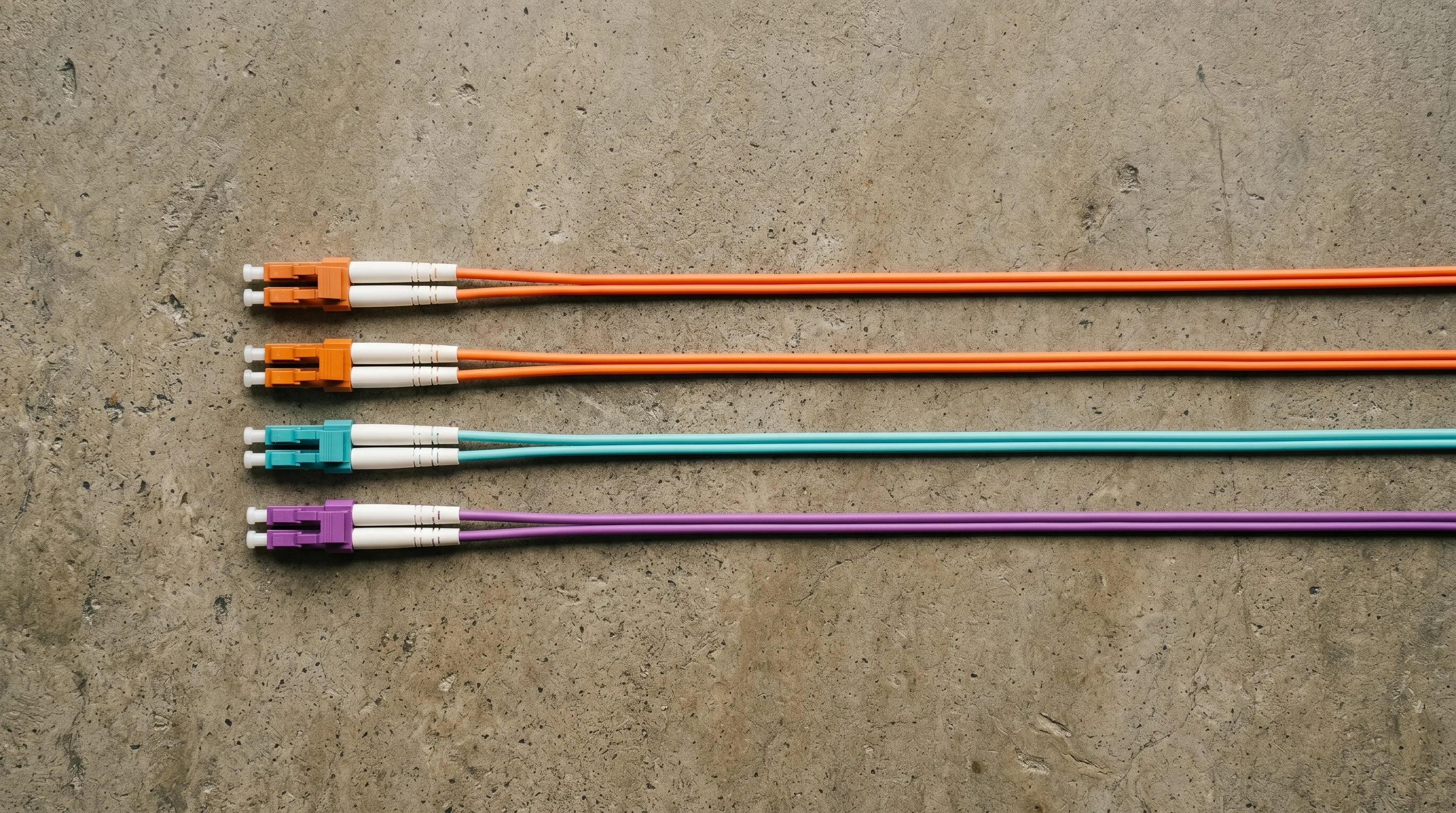
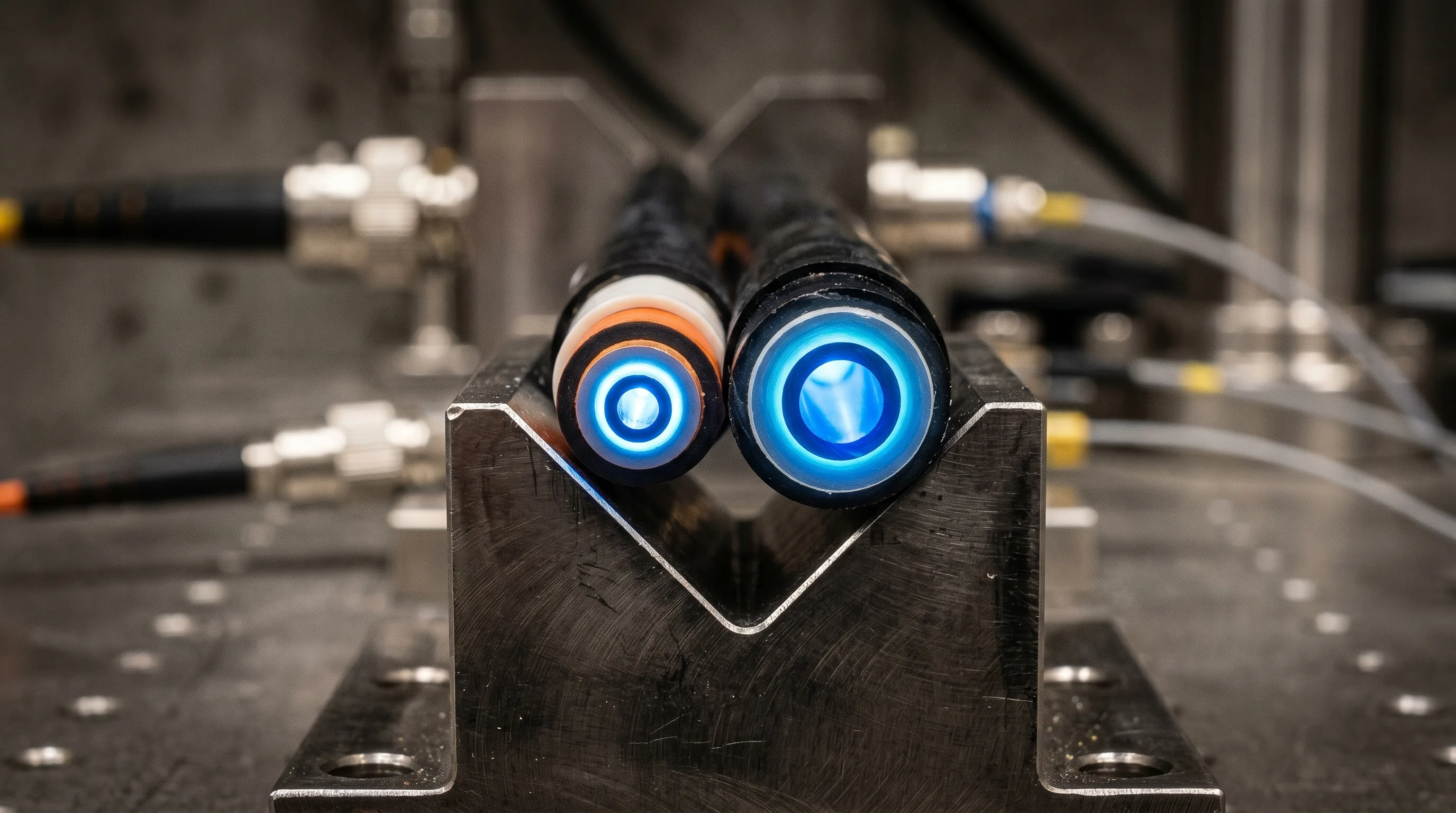
OM1 vs. OM2 Fiber Optic Cables
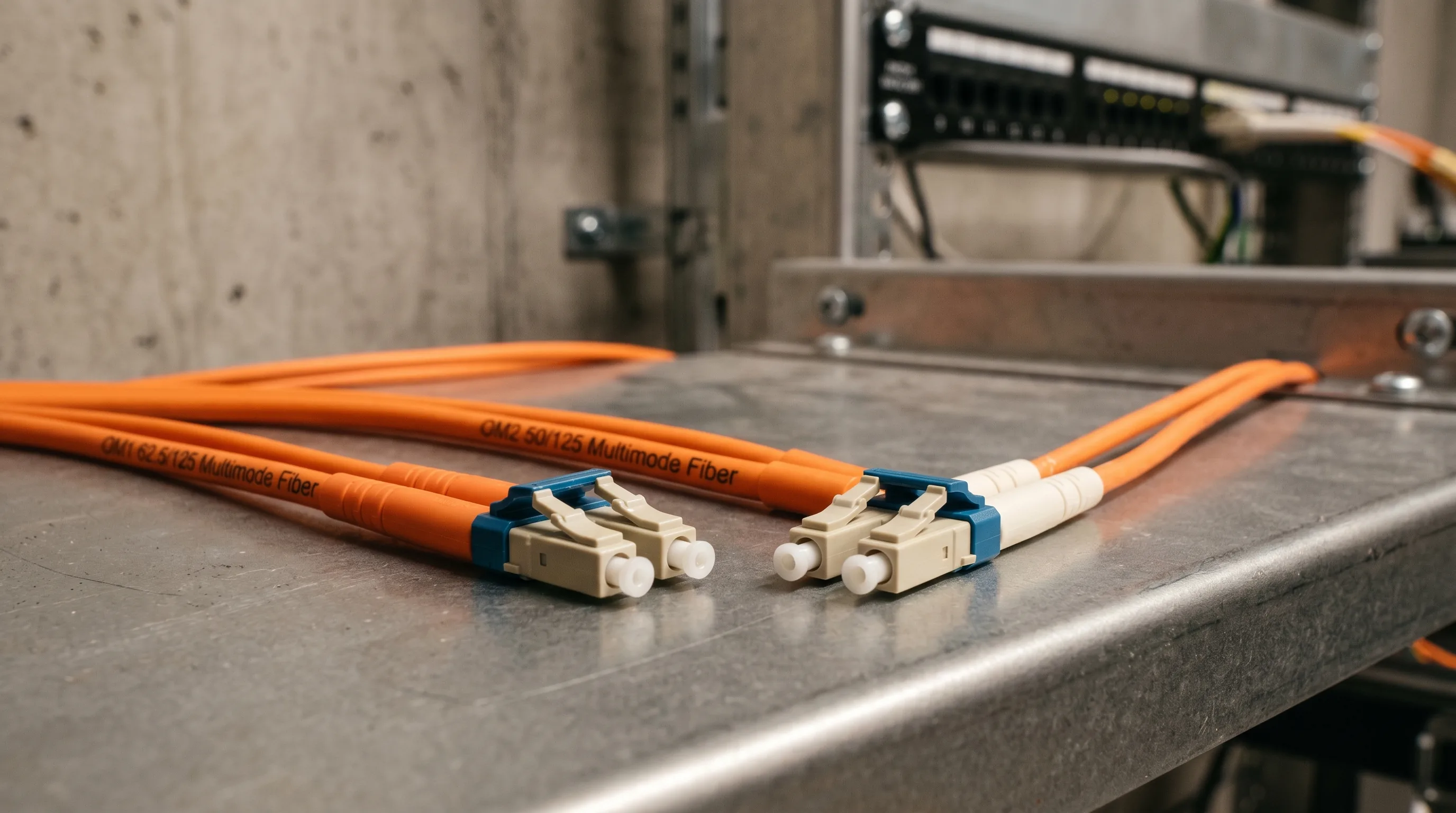
Key Differences and Choosing the Right Cable for Your Network
In today's modern network infrastructures, fiber optic cables are essential for supporting high-speed data transfer and ensuring reliable communication. Among the various types of fiber optics, multimode fibers — specifically OM1 and OM2 — are widely used for applications that don't require the highest speeds or longest transmission distances. These cables serve as critical components in the communication network of businesses, data centers, and more. However, choosing between OM1 vs OM2 fiber can be challenging due to the subtle yet important differences in their performance capabilities.
Here TTI Fiber Factory will explore OM1 vs. OM2 fiber optic cables, providing a detailed comparison of their specifications, performance, and best-use scenarios. Whether you're setting up a small office network or planning to upgrade your enterprise's communication infrastructure, this guide will help you make an informed decision about which type of fiber cable suits your needs.
What is OM1 Fiber Optic Cable?
OM1 (Optical Multimode 1) fiber optic cables have been a staple in communication systems for many years, primarily due to their cost-effectiveness and reliable performance over short distances.
Technical Specifications of OM1
OM1 cables are characterized by their 62.5-micron core size. This relatively large core size, compared to newer fiber types, enables the transmission of light signals in multiple modes or paths, making it well-suited for short-distance communication.
- Core Size: 62.5 microns
- Bandwidth: 200 MHz·km at 850 nm wavelength
- Maximum Distance:
- 10 Gbps up to 33 meters
- 1 Gbps up to 275 meters
OM1 cables are typically used for lower-speed networks, such as legacy systems, or in environments where high-speed data transmission over long distances isn't required.
How OM1 Works
OM1 cables work by allowing light to travel down the fiber core in multiple modes. The larger 62.5-micron core diameter increases the likelihood of signal dispersion (where light pulses spread out as they travel), which limits the bandwidth and transmission distance. While OM1 provides acceptable performance for slower speeds, its limitations become apparent at higher data rates.
Advantages and Limitations of OM1
Advantages:
- Cost-effective: OM1 cables are among the most affordable fiber optic options, making them a budget-friendly choice for businesses with limited bandwidth requirements.
- Simplicity: OM1 is simpler to install, especially in legacy network systems that don't require high-speed data transfer.
Limitations:
- Lower Bandwidth: OM1 offers lower bandwidth (200 MHz·km) than more advanced fiber types like OM2, OM3, or OM4, making it unsuitable for high-speed, modern network setups.
- Shorter Distance: OM1 can only support short-distance transmission at speeds greater than 1 Gbps, limiting its use in larger networks.
What is OM2 Fiber Optic Cable?
OM2 cables, while similar to OM1, offer improved performance and are designed to support higher-speed data transmission over longer distances.
Technical Specifications of OM2
OM2 cables are characterized by their 50-micron core size, which is smaller than OM1 but still large compared to single-mode fiber cables. The reduced core size of OM2 results in reduced modal dispersion, improving signal integrity over longer distances and at higher speeds.
- Core Size: 50 microns
- Bandwidth: 500 MHz·km at 850 nm wavelength
- Maximum Distance:
- 10 Gbps up to 82 meters
- 1 Gbps up to 550 meters
OM2 cables support higher speeds and can transmit data over longer distances than OM1, making them better suited for medium-range network infrastructures.
How OM2 Works
OM2 fiber cables work similarly to OM1 in that they allow multiple light modes to propagate through the fiber. However, the smaller 50-micron core reduces the amount of light dispersion, resulting in higher bandwidth and more stable performance over longer distances. OM2 is well-suited for higher-speed applications like 10 Gbps Ethernet in environments that require medium-range data transmission.
Advantages and Limitations of OM2
Advantages:
- Higher Bandwidth: OM2 offers a 500 MHz·km bandwidth, which is significantly higher than OM1, making it a more capable choice for higher-speed data transmission.
- Longer Distance: OM2 supports longer transmission distances, especially for 10 Gbps networks, making it a better option for medium-to-large network infrastructures.
Limitations:
- Cost: While not as expensive as higher-grade fiber cables like OM3 or OM4, OM2 is slightly more expensive than OM1. However, the increased performance justifies the cost in most cases. For a broader perspective on the full OM lineup, see our guide on the difference between OM1, OM2, OM3, and OM4.
- Limited Future-Proofing: For businesses with plans to expand to higher data rates (such as 40 Gbps or 100 Gbps), OM2 may eventually need to be replaced by higher-grade cables like OM3 or OM4 — and some engineers now argue OM2 itself is reaching the end of its useful life (see is OM2 obsolete?).
OM1 vs. OM2 — Key Differences
At first glance, OM1 and OM2 may seem quite similar, but there are several key differences that can significantly impact performance in certain applications.
Core Size and Data Transmission
The core size is the most noticeable difference between OM1 and OM2. OM1 features a 62.5-micron core, while OM2 has a smaller 50-micron core. The reduced core size in OM2 reduces modal dispersion, allowing the signal to travel more efficiently. As a result, OM2 can handle higher speeds and longer distances than OM1. For a deeper dive on this trade-off, read our article on 50/125 vs 62.5/125 fiber — which should you choose?
Bandwidth and Performance
- OM1 has a 200 MHz·km bandwidth at 850 nm, suitable for 1 Gbps speeds over short distances.
- OM2 offers 500 MHz·km bandwidth at 850 nm, making it better for 10 Gbps speeds over longer distances (up to 82 meters).
The increased bandwidth and reduced modal dispersion of OM2 make it more suitable for modern applications that require higher speeds, such as data centers and enterprise-level networking.
Distance and Speed
Here's a comparative chart showing the maximum distance for different speeds:
| Speed | OM1 Maximum Distance | OM2 Maximum Distance |
|---|---|---|
| 10 Gbps | 33 meters | 82 meters |
| 1 Gbps | 275 meters | 550 meters |
As we can see, OM2 offers significantly longer distances at higher data rates, making it the better choice for larger and more demanding network environments.
Cost Considerations
- OM1 is typically cheaper than OM2 due to its older technology and lower performance.
- OM2, while more expensive, offers better performance, making it a better choice for medium-range applications where higher speeds and distances are needed.
Applications of OM1 and OM2 Fiber Cables
OM1 Applications
OM1 is ideal for smaller, less demanding network environments where long distances and high-speed data transfer are not essential. Common applications include:
- Legacy Networks: Ideal for organizations still operating older systems that don't require high-speed transmission.
- Small Office or Home Networks: Used in short-distance communication setups, such as between buildings or within a single building.
- Educational Institutions: Suitable for educational environments where low-cost, reliable networking is needed.
OM2 Applications
OM2 is more versatile and can be used in a broader range of applications, including:
- Medium to Large Network Infrastructures: OM2 is well-suited for enterprise environments requiring higher speeds over moderate distances.
- Data Centers: OM2 supports 10 Gbps Ethernet and can handle high-density server environments more effectively than OM1.
- LANs for Businesses: Larger office buildings, factories, and businesses benefit from OM2's ability to handle 10 Gbps connections over distances up to 82 meters.
OM2 is often deployed alongside OM1 patch leads and jumpers in mixed-grade LAN backbones — TTI Fiber manufactures compatible OM1/OM2 fiber optic patch cords in LC, SC, and MPO/MTP configurations.
Choosing Between OM1 and OM2 Fiber Cables
- Data Speed: If you need to support higher speeds (10 Gbps or more) for your network, OM2 is the better option.
- Transmission Distance: OM2 supports longer transmission distances for high-speed data transmission compared to OM1.
- Future-Proofing: OM2 offers better scalability for future upgrades, while OM1 may limit future expansion.
Both OM1 and OM2 are backward compatible, meaning that you can mix and match them in your network as long as they meet the necessary bandwidth requirements. If your deployment may eventually push to 40 Gbps or 100 Gbps, it's worth understanding the reach ceiling of the next generation as well — see how far OM4 multimode fiber can transmit and the applications of OM4 and OM5 fiber cables before you finalize your cable plant design.