What Is a Good dB Loss for Fiber Optics?
What Is Acceptable dB Loss for Fiber?
When it comes to optical fiber, dB loss (decibel loss) is a critical metric for determining the quality and efficiency of data transmission. Simply put, dB loss measures the reduction in signal strength as light travels through the optical fiber. The lower the loss, the better the performance of the fiber optic cable.
Loss in fiber optics occurs due to attenuation, which is caused by various factors, including scattering, absorption, and physical imperfections in the fiber. The goal is to minimize this loss as much as possible to ensure efficient data transmission over long distances.
In optical fiber systems, the acceptable dB loss is determined based on the fiber type, application, and distance of transmission. The lower the dB loss, the higher the quality of the signal, and the farther it can travel without significant degradation.
What Is a Good dB Loss for Fiber Optics?
Good dB Loss for Multimode Fiber
An acceptable dB loss is typically around 3.5 dB/km at 850 nm and 1.5 dB/km at 1300 nm for standard multimode fibers.
Good dB Loss for Single-Mode Fiber
The loss is much lower, with an acceptable dB loss of around 0.4 dB/km at 1310 nm and 0.3 dB/km at 1550 nm.
These values represent the industry standards for commonly used fiber optics, but the actual acceptable loss may vary depending on the specific requirements of your network, such as the type of equipment used and the length of the fiber run.
Factors Affecting dB Loss in Optical Fiber
Several factors influence the dB loss in optical fiber cables, including (see also what causes the majority of loss in fiber optics for a deeper breakdown):
- Fiber optic cables perform better at certain wavelengths. Typically, 1310 nm and 1550 nm wavelengths offer the lowest attenuation in single-mode fiber, making them ideal for long-distance transmissions.
- As mentioned earlier, single-mode fibers tend to have much lower loss compared to multimode fibers, especially over long distances. This makes them more suitable for high-performance applications, such as long-distance telecommunications.
- Bending the fiber excessively can increase the dB loss. It's crucial to follow installation guidelines to avoid tight bends that could lead to signal loss.
- The type and quality of materials used in the fiber construction, such as the purity of the glass and the quality of the connectors, can also impact the overall loss.
- Poorly connected fiber ends or improper splicing can lead to significant signal loss — including when adding a passive PLC splitter to the link. It's essential to ensure proper installation and maintenance practices to minimize these types of losses. (See also: how much loss is added when using a passive splitter.)
Industry Standards and Testing for dB Loss
To ensure fiber optic systems are performing to their maximum potential, industry standards, such as those established by the International Telecommunication Union (ITU) and Telecommunications Industry Association (TIA), are followed. These standards define acceptable performance levels for various types of fiber and their applications.
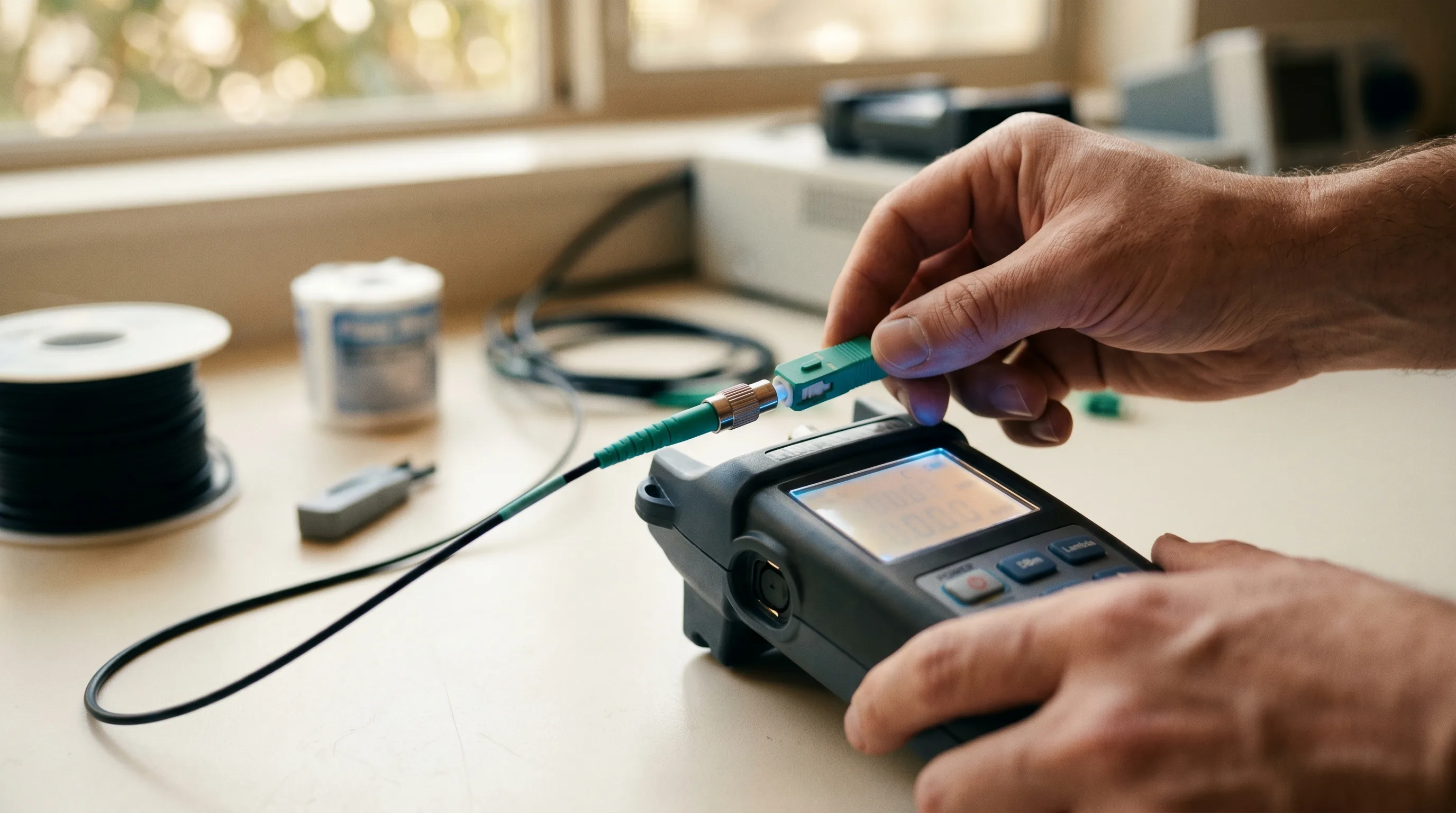
Testing for dB loss is typically performed using specialized equipment like an Optical Time Domain Reflectometer (OTDR), which can measure attenuation over long fiber runs and identify specific sections that may be causing excessive loss.
How to Minimize dB Loss in Your Fiber Network
To reduce the dB loss and ensure optimal performance, consider the following practices:
- Use higher-quality fiber: opt for high-grade single-mode fiber cables for long-distance applications.
- Proper installation: ensure that fibers are installed with adequate bending radius and are not subjected to physical stress.
- Regular maintenance: clean and inspect connectors, splices, and fibers regularly to avoid buildup that could increase loss.
- Utilize fiber amplifiers: for extremely long distances, use optical amplifiers that can boost the signal and compensate for attenuation.
Acceptable dB loss varies based on fiber type, transmission wavelength, and network requirements. For most applications, keeping the loss low is crucial for maintaining high-speed, reliable communications. Whether you're working with multimode or single-mode fiber, understanding and managing dB loss is key to building and maintaining efficient fiber optic networks.
What Affects Fiber Optic Performance
The performance of optical fiber systems is influenced by various factors. These factors can either improve or degrade the efficiency of light transmission through the fiber. Understanding and mitigating these factors is key to ensuring that your fiber optic network operates at its best. Let's break down the most important elements affecting fiber optic performance:
1. Attenuation (Signal Loss)
Attenuation refers to the loss of signal strength as it travels along the fiber. This is a natural phenomenon but can be minimized with high-quality fiber and proper installation. Attenuation is often caused by scattering, absorption, or bending of the light within the fiber. The longer the distance the signal travels, the greater the attenuation.
What to do: use high-quality fiber, ensure minimal bends, and opt for single-mode fibers for long-distance transmission.
2. Dispersion
Dispersion occurs when light pulses spread out as they travel along the fiber, causing them to overlap and distort the signal. There are two main types of dispersion:
- Chromatic dispersion: caused by different wavelengths of light traveling at different speeds.
- Modal dispersion: more common in multimode fibers, it occurs when light travels along multiple paths, resulting in a delay between them.
What to do: use single-mode fiber for long distances to reduce modal dispersion, and manage chromatic dispersion by selecting the appropriate wavelength for the fiber.
3. Bending Loss
Bending loss happens when the fiber is bent beyond its acceptable limit, causing the light to escape. The tighter the bend, the greater the light loss. This can happen during installation or if the fiber is subjected to physical stress over time.
What to do: avoid sharp bends during installation. Follow the manufacturer's guidelines for minimum bend radius to ensure signal integrity.
4. Fiber Quality and Manufacturing Defects
The quality of the fiber material itself plays a crucial role in performance. Imperfections such as microbends, contaminants, or structural flaws within the fiber can cause light to scatter and lead to higher attenuation.
What to do: work with trusted, reputable manufacturers who meet strict quality standards. Conduct regular inspections to ensure the fiber remains free of defects.
5. Connector and Splice Loss
Every time an optical fiber is connected or spliced, there is a risk of signal loss. This loss can be caused by poor alignment, contamination, or incorrect installation of connectors or splicing points. Even the best fibers can suffer performance degradation if connectors aren't clean or aligned properly.
What to do: ensure connectors are clean and installed with the right techniques. Regularly check and test splice points and connectors to ensure a tight, low-loss connection. Sourcing from a reputable manufacturer of fiber optic splitters and patch cords is a low-cost way to reduce avoidable splice and connector loss.
6. Temperature Variations
Extreme temperature changes can cause fibers to expand or contract. This expansion and contraction can lead to physical stress, creating microbends or mechanical damage that affects signal transmission. Temperature changes can also impact the refractive index of the fiber material, affecting light speed.
What to do: install fiber in temperature-controlled environments, or choose cables rated for extreme conditions if they are being installed outdoors or in harsh environments.
7. External Interference
While optical fiber is largely immune to electromagnetic interference (EMI) — one of its key advantages over copper cables — external environmental factors such as high-voltage lines or nearby equipment with strong electrical fields can still impact performance, especially when using substandard fiber.
What to do: for environments with potential EMI, use properly shielded fiber or install fiber at a distance from high-interference sources.
8. Fiber Length
The longer the fiber, the greater the potential for signal attenuation. Fiber length directly affects the efficiency of signal transmission, especially for multimode fibers. Long distances can cause the signal to degrade, making it harder for the receiver to interpret the data correctly.
What to do: for longer distances, opt for single-mode fiber, which is designed to minimize attenuation over long spans. Alternatively, use repeaters or amplifiers to boost the signal if necessary.
9. Wavelength of the Light
Different wavelengths of light behave differently within optical fibers. Some wavelengths may experience lower attenuation than others, depending on the fiber's design. In general, wavelengths in the 1300 nm to 1550 nm range are most commonly used because they have lower attenuation, especially for single-mode fibers.
What to do: select the optimal wavelength for your specific fiber optic system. For long-distance communication, the 1550 nm wavelength is often preferred for its low attenuation properties.
10. Single-Mode vs. Multimode
The choice between single-mode and multimode fiber is one of the most critical factors affecting performance. Single-mode fiber is optimized for long-distance transmission with minimal loss, while multimode fiber is better for shorter distances but suffers more from modal dispersion, limiting its bandwidth and range.
What to do: choose single-mode fiber for long-distance, high-bandwidth applications, and multimode fiber for shorter runs with lower data requirements.
Fiber optic performance is influenced by several interconnected factors that impact data transmission speed, quality, and reliability. By understanding and addressing these factors — such as attenuation, dispersion, fiber quality, and proper installation — you can ensure that your fiber optic system runs efficiently and meets your performance expectations. Regular maintenance, careful installation, and choosing the right fiber for the job can help mitigate performance issues, allowing your network to operate smoothly and efficiently.