What Is the Difference Between Active Splitter and Passive Splitter?
What Is the Difference Between Active Splitter and Passive Splitter?
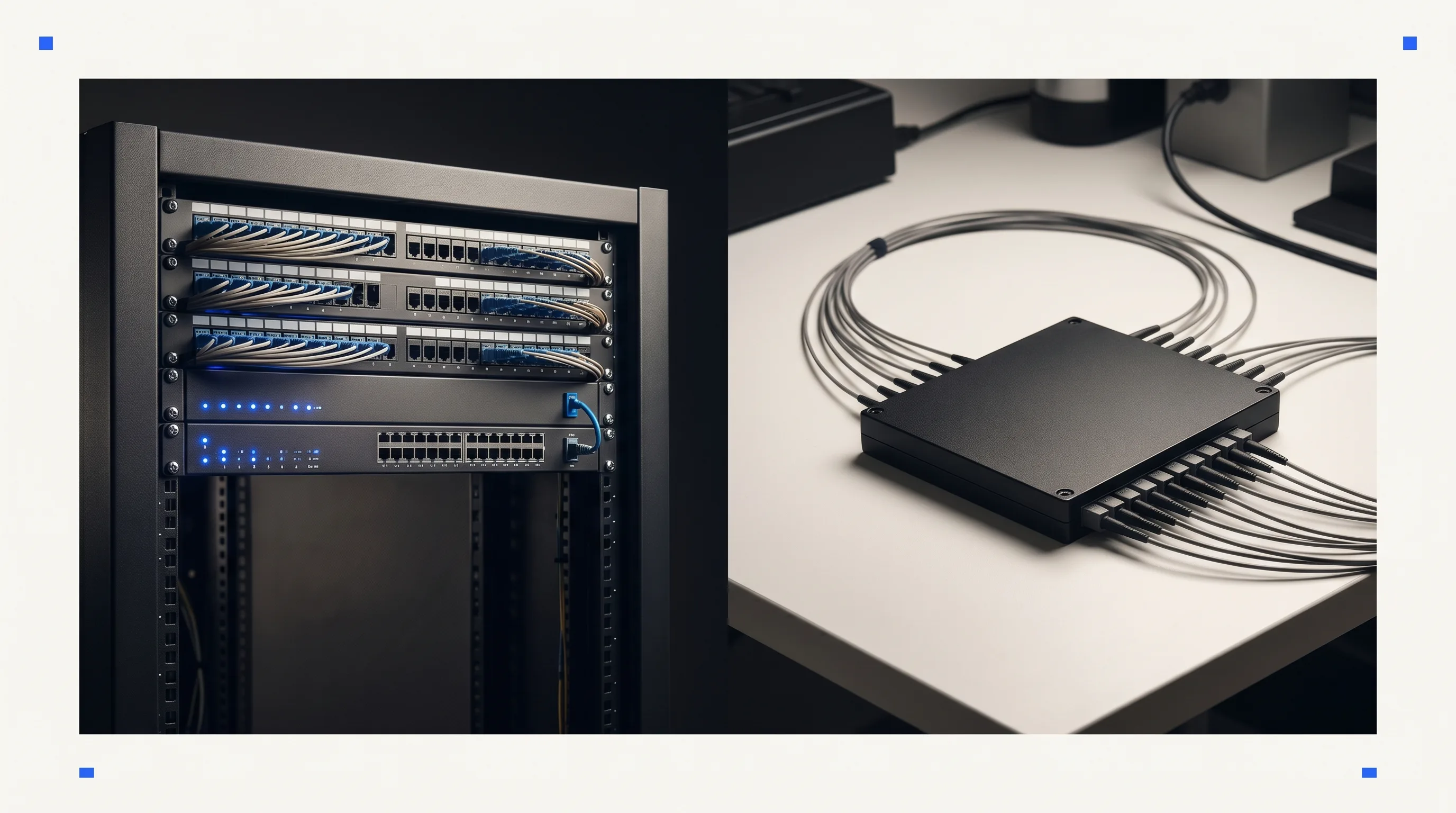
For fiber optics and signal distribution, splitters are essential components. However, not all splitters are created equal. For IT managers, network designers, and B2B procurement specialists, understanding the key differences between active and passive splitters is more than just technical trivia — it directly affects system design, performance, and cost. This guide also compares how signal loss differs between the two splitter types.
What Exactly Is a Splitter?
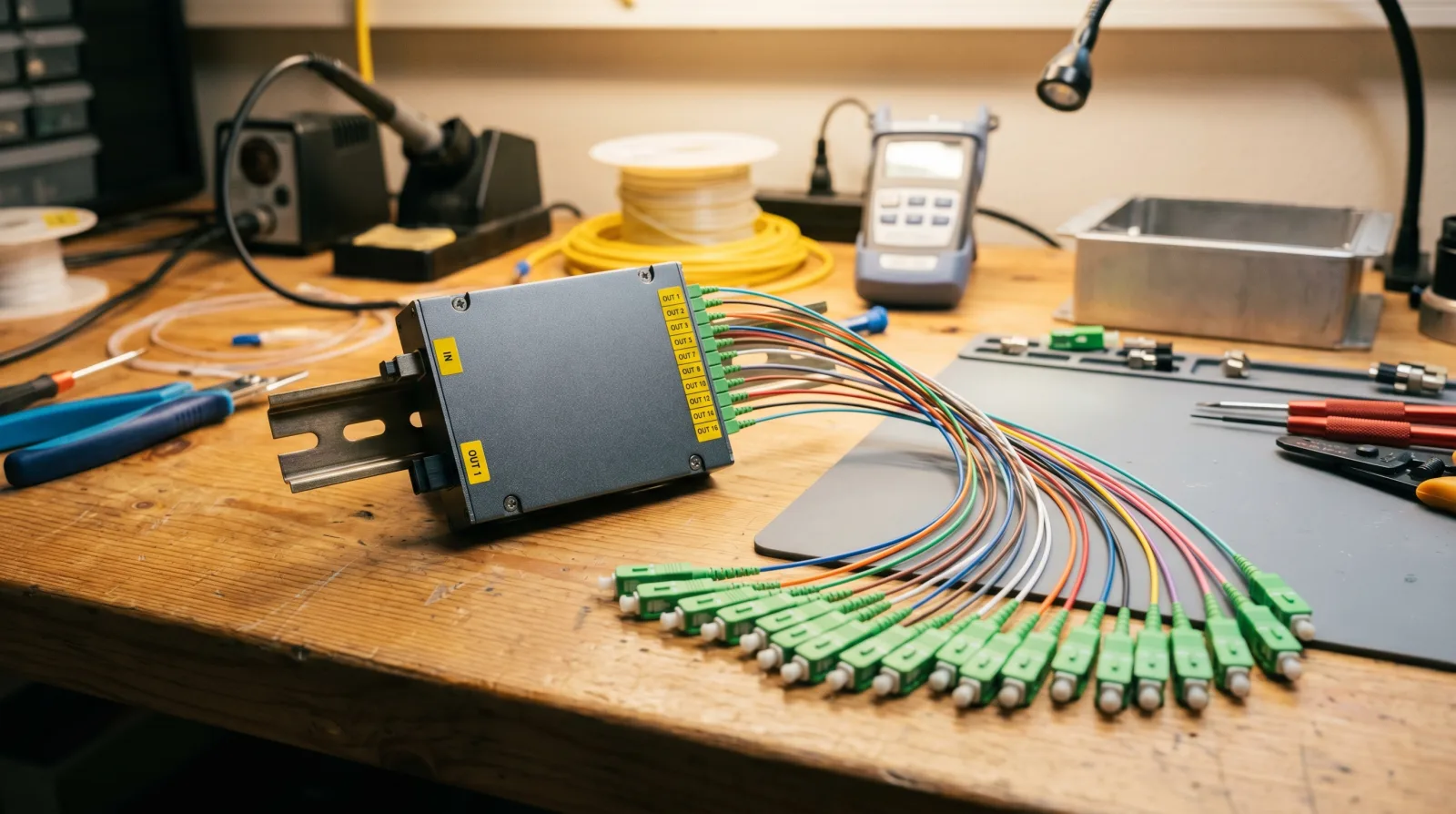
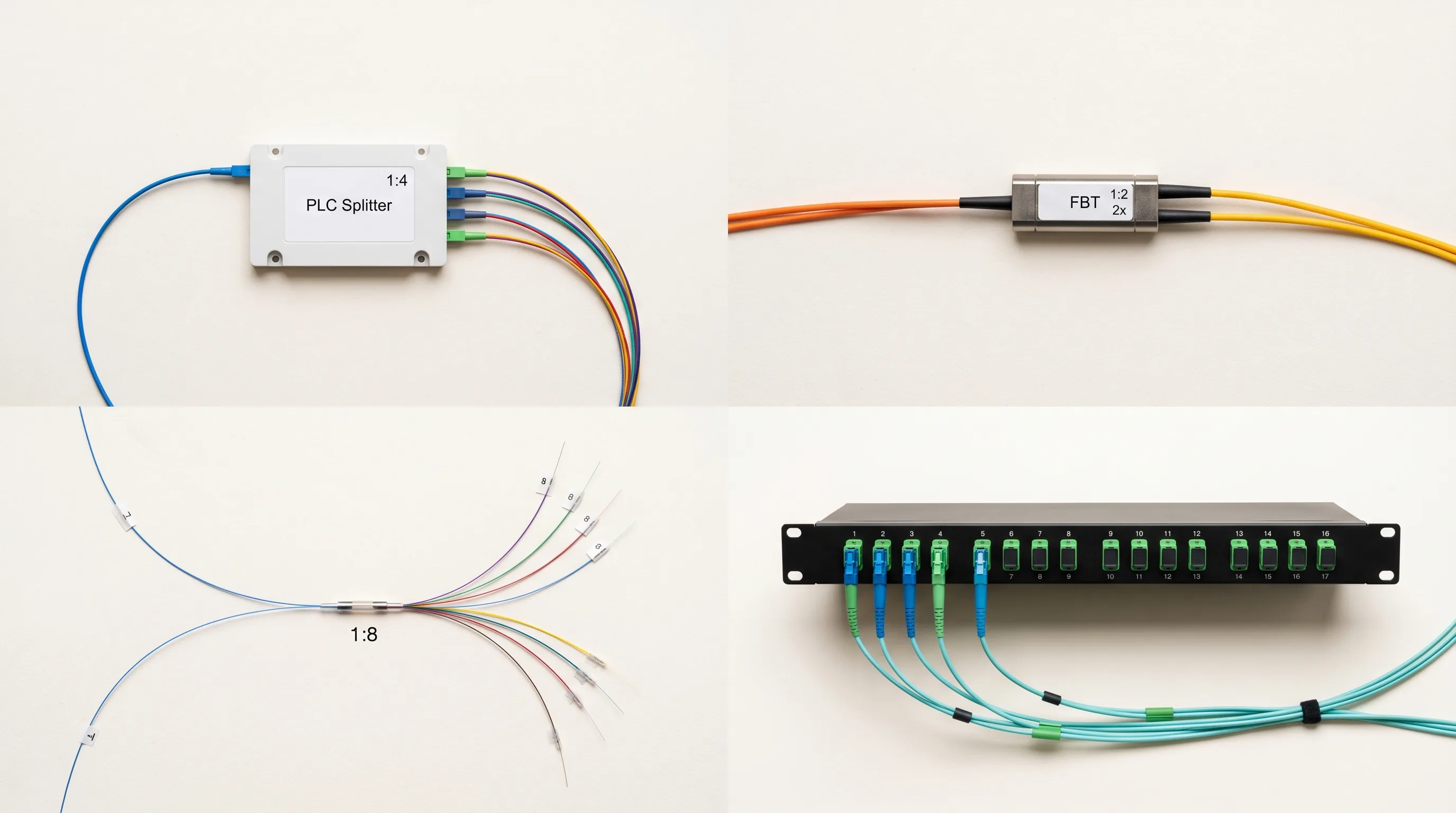
A splitter is a device that takes one input signal and divides it into multiple output signals. Whether you're dealing with fiber optic networks, HDMI video systems, or RF distribution, splitters help ensure that your signal reaches multiple endpoints efficiently. The two primary types are active and passive splitters, and the choice between them depends heavily on your application requirements.
Passive Splitter: Simple, Reliable, and Unpowered
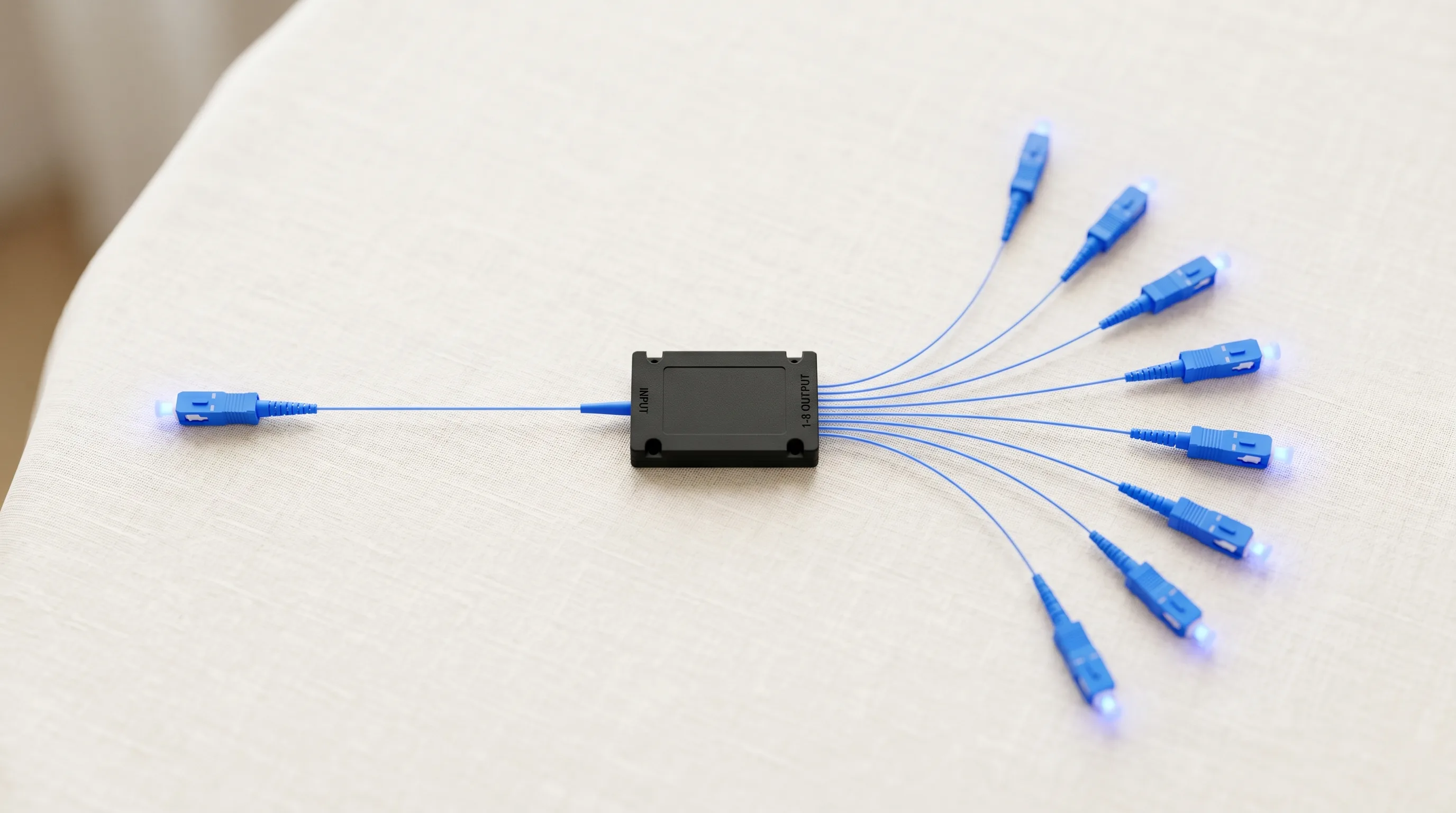
A passive splitter does exactly what its name implies: it splits a signal without using any external power. It works by distributing the input signal evenly across its output ports.
- Power: No external power required
- Signal Handling: Introduces some loss due to the split
- Common Applications: FTTH (Fiber-to-the-Home), cable TV networks, basic LANs
- Advantages: Low cost, no power consumption, fewer components
- Disadvantages: No amplification, signal degradation possible over long distances
Active Splitter: Powered for Performance
An active splitter, on the other hand, requires an external power source. It not only splits the signal but also amplifies it to maintain signal quality across multiple outputs and longer distances.
- Power: Requires external power
- Signal Handling: Maintains or boosts signal strength
- Common Applications: Data centers, video broadcasting, industrial Ethernet, HDMI distribution
- Advantages: Consistent signal quality, supports more outputs
- Disadvantages: Higher cost, power dependency, increased complexity
Active vs Passive Splitters: Key Technical Differences
Here's a quick side-by-side comparison to help you assess the differences:
| Feature | Passive Splitter | Active Splitter |
|---|---|---|
| Power Source | None | Required |
| Signal Amplification | No | Yes |
| Signal Loss | Yes (inherent) | Minimal (compensated) |
| Complexity | Low | Moderate to High |
| Cost | Lower | Higher |
| Maintenance | Minimal | Moderate (power management) |
When Should You Use Each Type?
Choosing between an active splitter and a passive splitter depends on your network's requirements — especially in terms of power availability, signal distance, bandwidth needs, and overall system complexity.
Use a Passive Splitter When:
- Your system doesn't require power at the splitter. Passive splitters work well in environments where running power to the splitter is difficult or unnecessary.
- Signal distance is short. In many FTTH (Fiber to the Home) or small-scale LAN applications, passive splitters efficiently split the signal with minimal acceptable loss.
- You want simplicity and reliability. With no active electronics involved, passive splitters are less prone to failure and easier to install and maintain.
- Cost is a primary concern. Passive splitters are significantly more affordable than their active counterparts, both in terms of initial cost and long-term maintenance.
Use an Active Splitter When:
- You need to amplify the signal. If your setup involves longer distances or multiple branches (e.g., distributing HDMI to multiple displays or extending Ethernet beyond standard lengths), active splitters help maintain signal quality.
- You require better control. Active splitters often include features like signal regeneration, buffering, or equalization — ideal for AV applications, data centers, or enterprise systems.
- Your network has complex architecture. In large commercial or industrial networks where consistency and signal strength are critical, active splitters offer better performance at scale.
B2B Applications Where Splitters Matter
- Telecom Networks: FTTH and FTTB deployments often use passive optical splitters
- Data Centers: Active splitters handle large-scale data distribution with minimal latency
- Broadcasting & AV Systems: Active HDMI splitters distribute high-quality video across multiple displays
- Enterprise Networks: Both types are used depending on network design and scale
ROI and Budget Considerations
Passive splitters are low-cost and have no ongoing power requirements, making them ideal for large-scale, budget-conscious rollouts. Active splitters require a higher upfront investment and ongoing power supply, but they offer better long-term performance in demanding environments. The ROI depends on your signal distance, output count, and quality needs. For a deeper analysis of how split ratio affects your link budget, see how much loss is added when using a passive splitter.
Leading Brands and Manufacturers
Here are some of the top global brands known for quality splitter solutions:
1. Corning
- Founded: 1851, USA
- Known for: Fiber optic passive components
- Hot product: OptiTect® 1x32 Splitter Module
2. CommScope
- Founded: 1976, USA
- Known for: End-to-end network infrastructure
- Hot product: FOSC 450 Fiber Optic Splitter
3. Optosun
- Founded: 2006, China
- Known for: High-precision PLC splitters
- Hot product: 1x64 Mini Plug-in Splitter
4. TP-Link
- Founded: 1996, China
- Known for: Consumer and SMB networking
- Hot product: HDMI Active Splitter Series
5. Belden
- Founded: 1902, USA
- Known for: Industrial Ethernet and AV distribution
- Hot product: FiberExpress Optical Splitters
Maintenance Best Practices for Active and Passive Splitters
Whether you're dealing with an enterprise-grade fiber optic network or a commercial AV setup, the longevity and performance of your splitter — active or passive — depend heavily on proper maintenance. While passive splitters are typically low-maintenance, active splitters demand more attention; both require periodic checks to prevent system failures and minimize downtime.
For Active Splitters:
Active splitters contain electronic components and power sources, so they require more regular care. Here's how to keep them in optimal shape:
- Inspect Power Supply Regularly: Ensure stable voltage and avoid power surges. Unstable power can degrade performance or cause total failure.
- Check Ventilation and Dust Accumulation: Active splitters generate heat. Keep the unit well-ventilated and dust-free using air filters or fans where necessary.
- Verify Signal Output: Use test equipment to confirm that each output channel is distributing signal at the intended strength and quality.
- Firmware Updates (if applicable): Some advanced active splitters come with firmware. Check with the manufacturer for updates to fix bugs or enhance compatibility.
- Backup Redundancy Plans: Always have spare units on hand for mission-critical systems. Downtime can be costly in a commercial setting.
For Passive Splitters:
Passive splitters don't have moving parts or require power — but they're not set-and-forget. Here's what to look out for:
- Visual Inspection for Damage or Dust: Fiber ports can accumulate dust or get scratched, which leads to signal loss. Use fiber inspection scopes to check periodically.
- Clean Connector Interfaces: Use lint-free wipes and isopropyl alcohol or a fiber cleaning kit. Even a small particle can significantly degrade signal quality.
- Check for Physical Stress: Ensure the splitter and connected fibers aren't under tension or sharp bends. Strain can cause micro-cracks or loss.
- Test Signal Loss: Perform OTDR (Optical Time-Domain Reflectometer) tests or power meter checks to monitor dB loss levels over time.
- Secure Mounting: Make sure the splitter is firmly mounted in rack enclosures or wall boxes to prevent movement or accidental disconnections.
Understanding the technical and commercial differences between active and passive splitters can greatly influence the success of your fiber optic or AV deployment. For businesses scaling their networks or expanding data distribution, making the right choice is essential. Explore TTI Fiber's full range of fiber optic splitters or read our related guide on the types of optical fiber splitters you should know about.